
How Flex Access gave blind and visually impaired visitors a guided route into Hamdan Bin Mohammed Smart University, Dubai
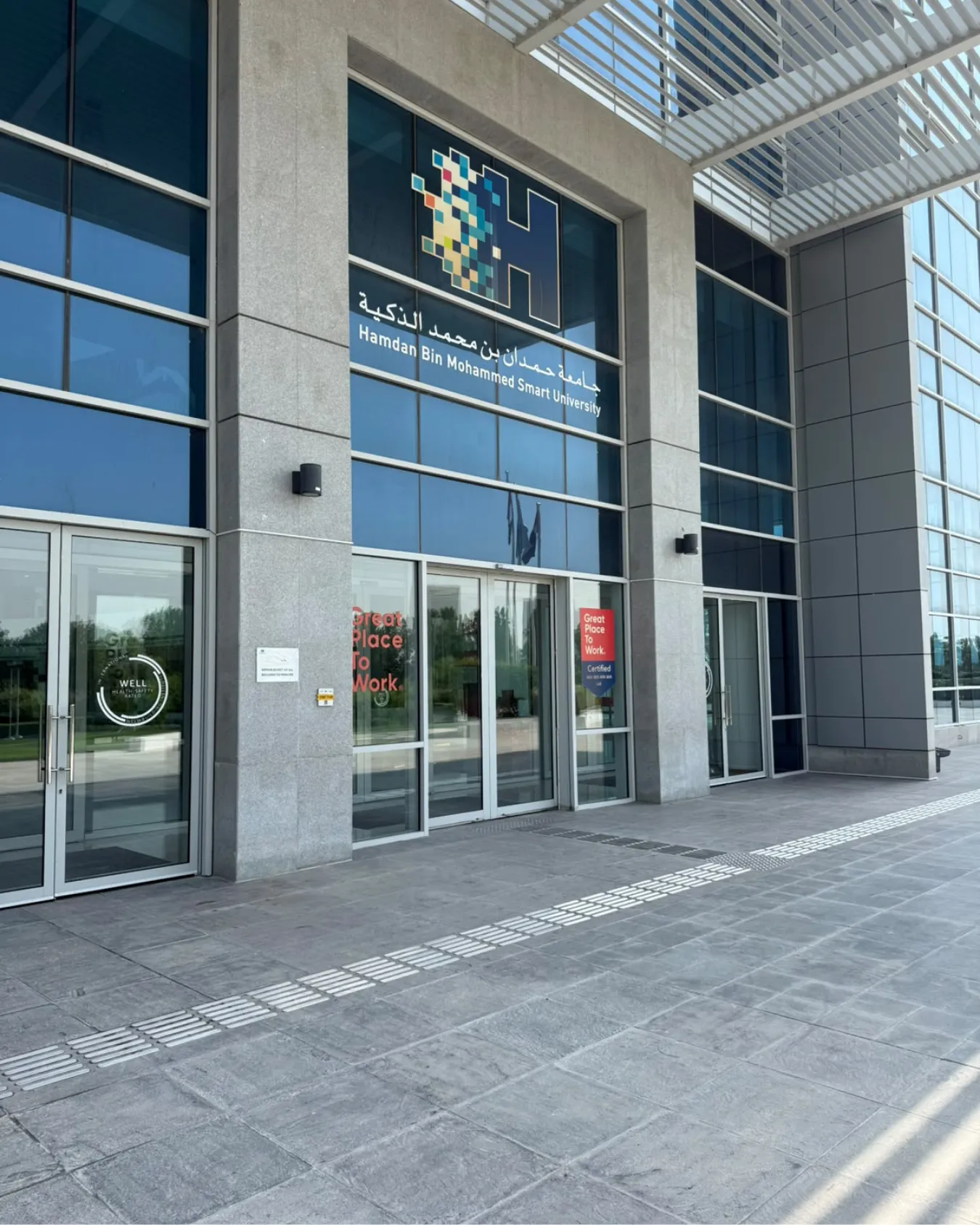
A continuous stainless steel path from the pedestrian approach to the main entrance, read underfoot and with a cane, so a visitor who cannot see the way in still finds it.
Client
Hamdan Bin Mohammed Smart University
Location
Dubai, UAE
Installed
October 2026
Scope
A guided route for blind and visually impaired visitors, designed, supplied and installed in SS 316
The challenge
A university entrance that only worked if you could see it
A university entrance is a shared arrival point. Students, staff, visitors and delivery traffic all converge on the same approach, and most of them read the route by sight. Signage, kerb lines, door positions. A blind or visually impaired visitor has none of that.
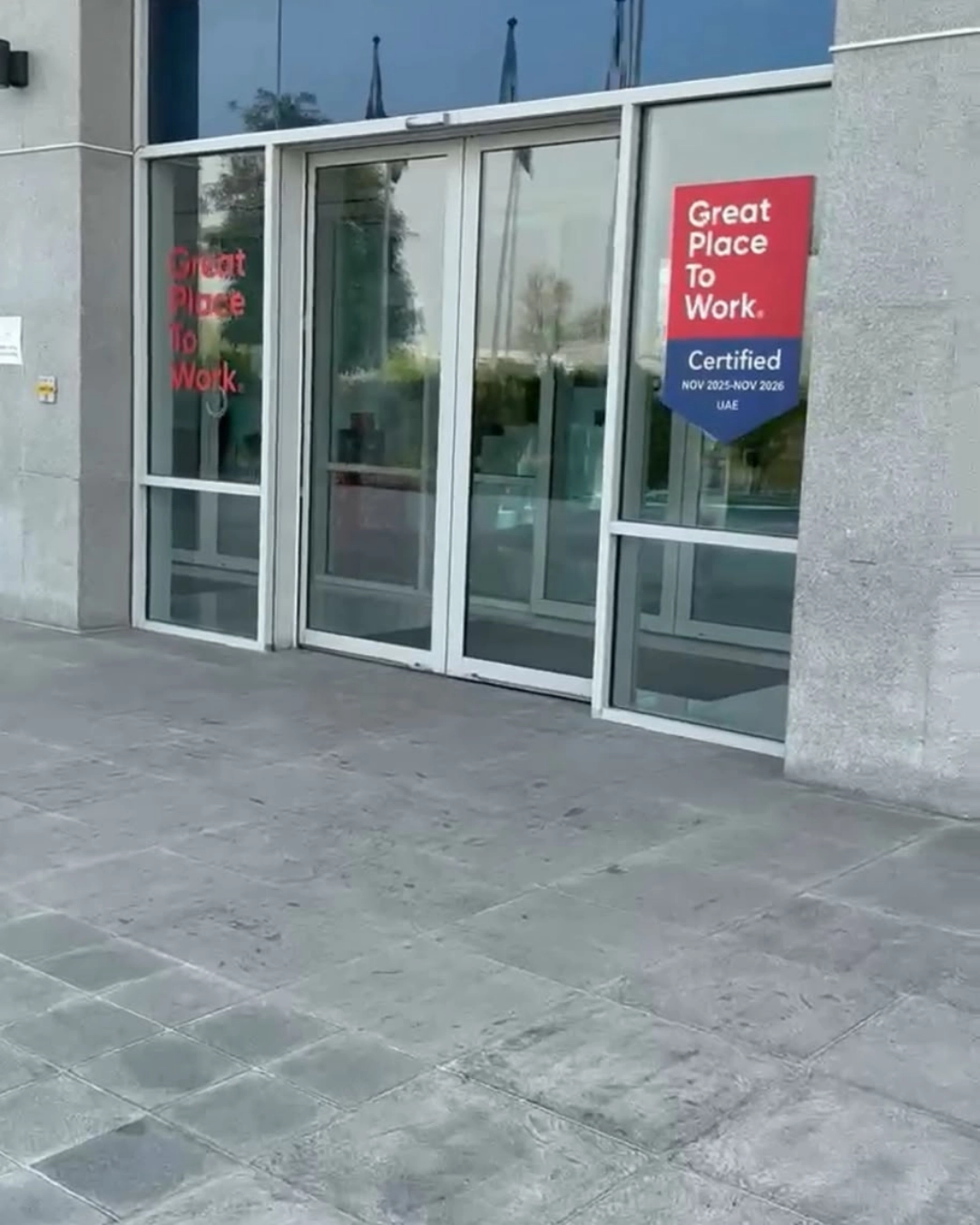
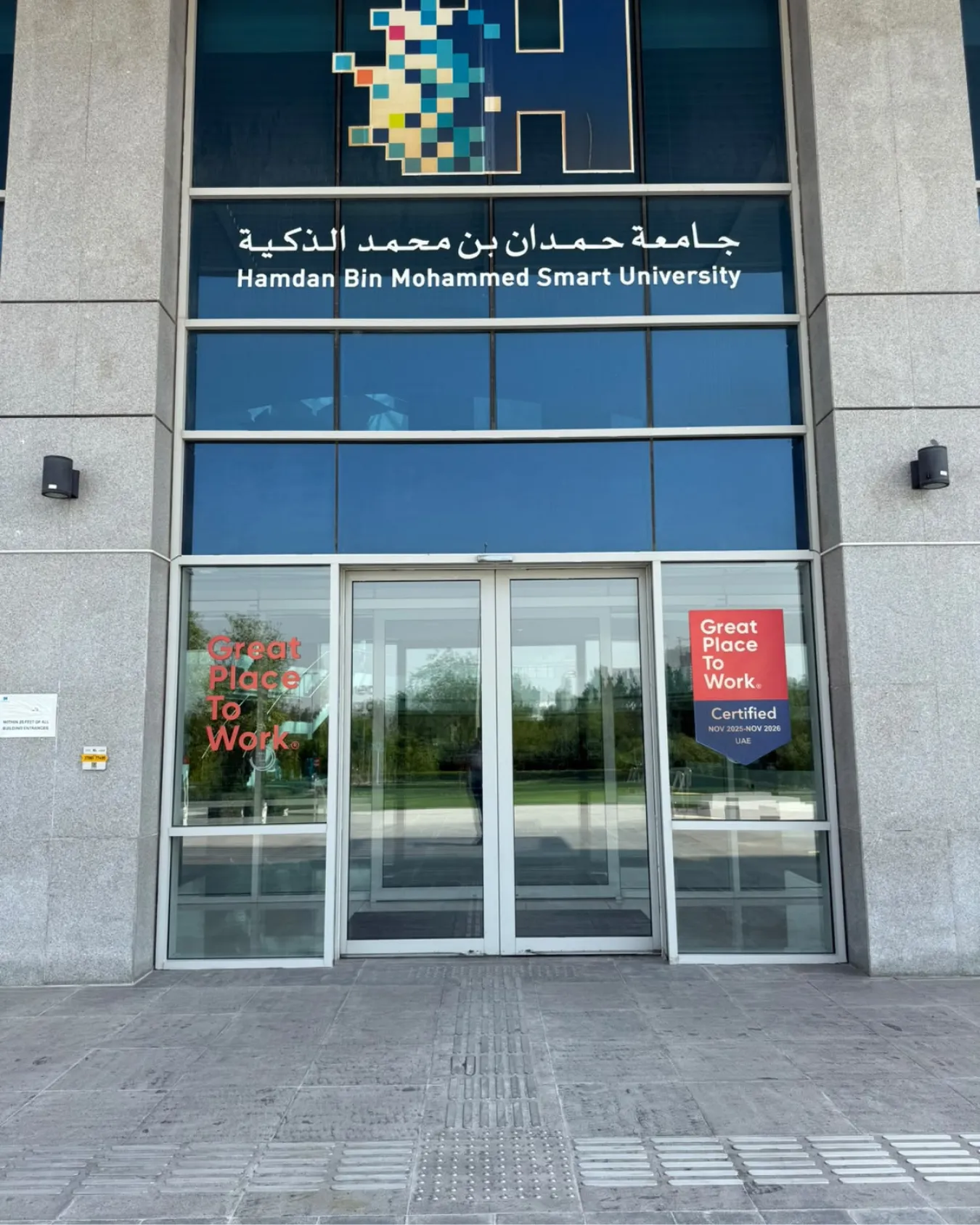
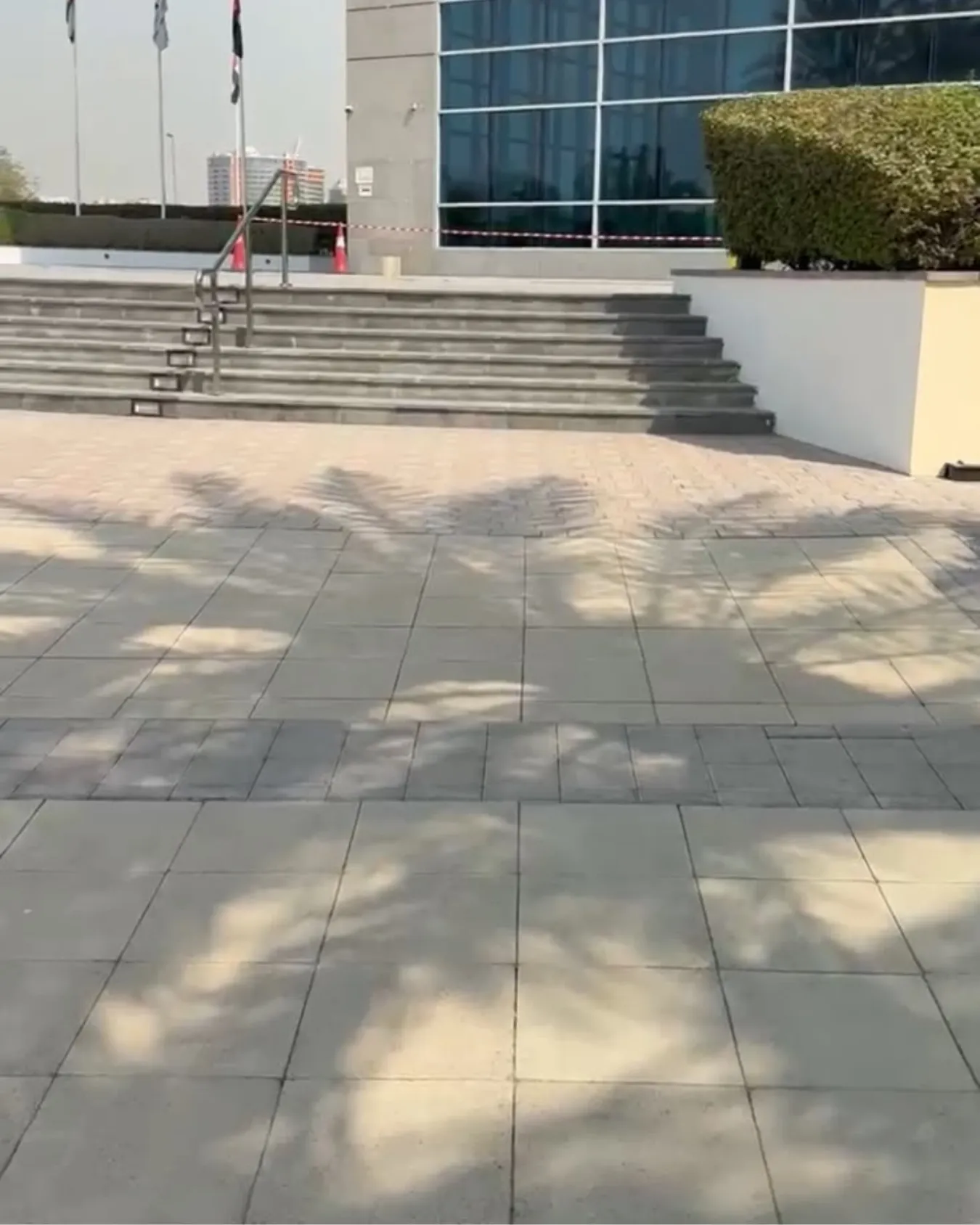
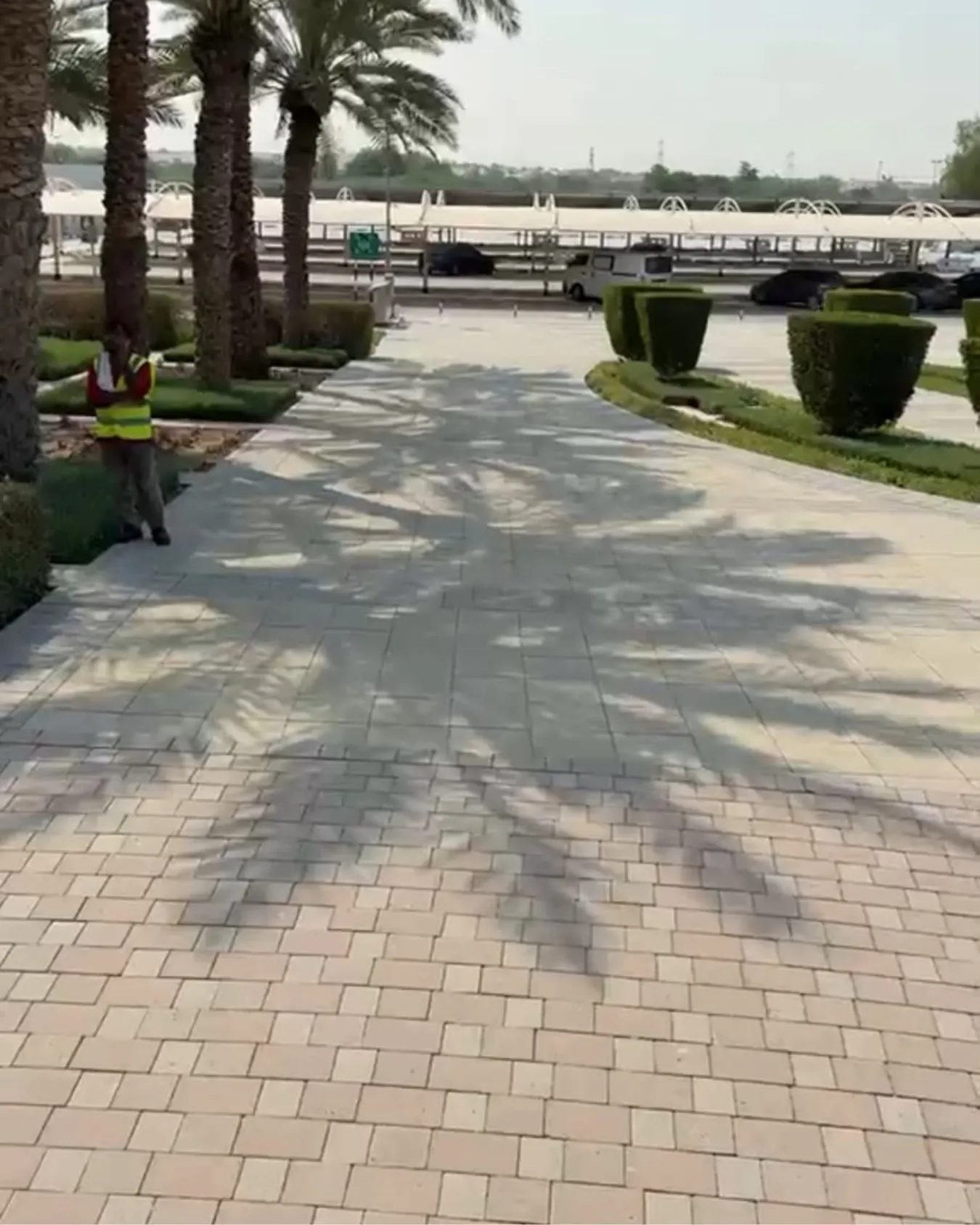
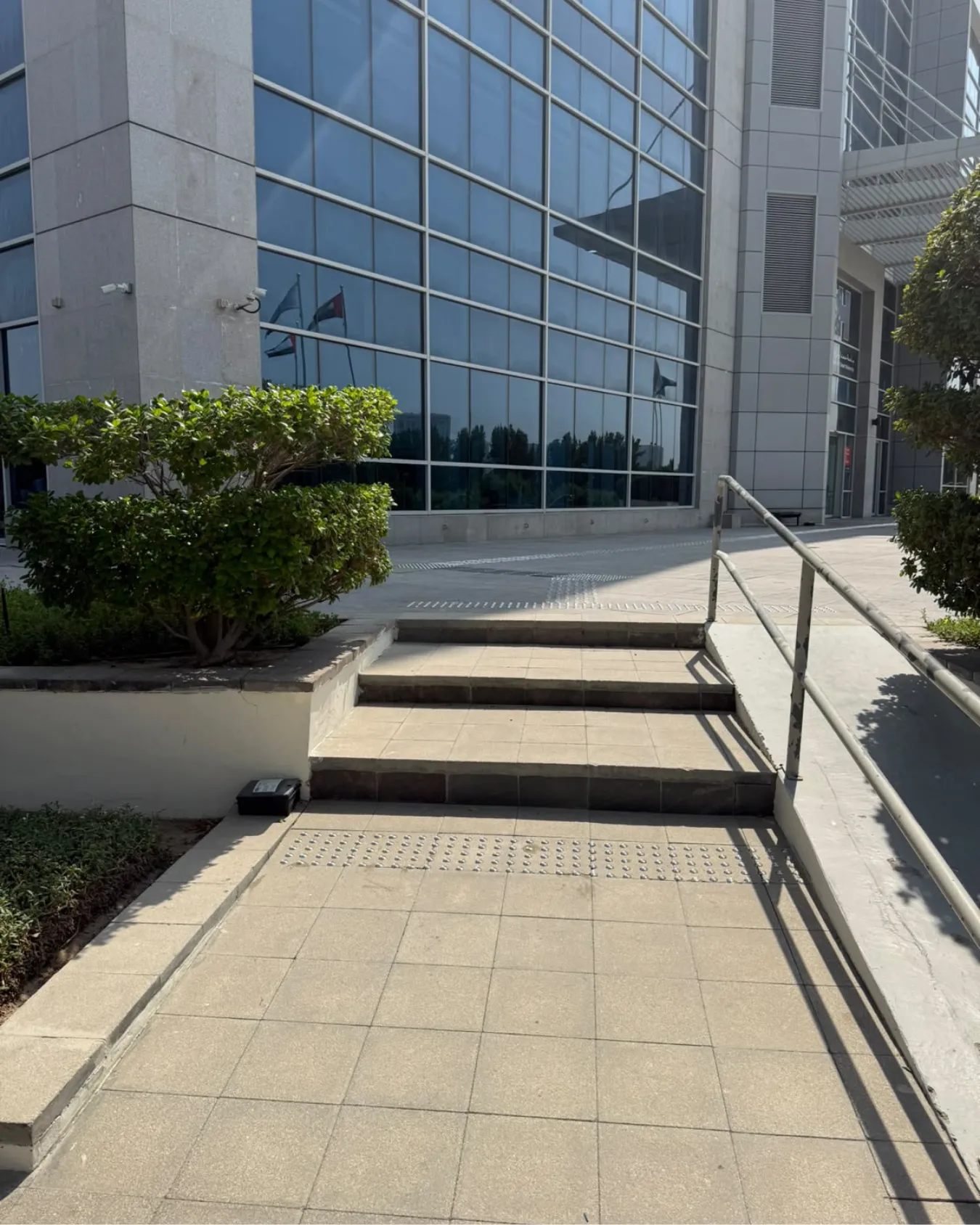
At HBMSU, the outdoor approach and the main entrance had no tactile surfaces. Nothing underfoot showed the direction of travel along the paved walkway, and nothing marked the point where the route reached the entrance. A visitor using a cane had no continuous line to follow from the pedestrian approach to the door.
No tactile guidance on the approach
Visually impaired students, staff and visitors had nothing to follow along the walkway and no warning surface at the entrance, so independent arrival was not possible.
A code and certification gap
HBMSU wanted its infrastructure aligned with the Dubai Universal Design Code and positioned for Wosool accessibility certification. That needed a specialist to plan the route, not just a material supplier.
The university needed one unbroken guiding path, built to survive UAE sun and heavy term-time footfall, and finished to suit a contemporary campus.
The solution
A route that can be read with a cane and underfoot
Flex Access delivered the project end to end, from site survey through to installation, with the layout set against Dubai Universal Design Code requirements. The route is built around how a blind visitor actually travels. A ribbed strip runs in the direction of travel and is followed with a cane or felt through the sole of a shoe, and a raised stud pattern breaks that rhythm wherever the visitor needs to stop or turn.
Stage 01
Site survey and route design
- Walking the route: The team surveyed the pedestrian approach and the entrance zone to map the path visitors actually take, then set where guidance was needed and where a stop or a change of direction had to be flagged.
- Code-led layout: Placement, spacing and orientation of the directional strips and warning studs follow Dubai Universal Design Code specifications for tactile walking surface indicators.
Stage 02
Material supply
- Grade 316 stainless steel: Flex Access supplied Grade 316 tactile directional strips and warning studs, selected for corrosion resistance in an outdoor, high-humidity environment.
- Detectable and durable: The profile stays legible underfoot and to a cane after sustained use, which matters on a route walked by thousands of people each term.
Stage 03
Installation on the outdoor approach
- A continuous route: Directional strips were installed into the paved walkway leading to the main entrance, giving an unbroken line of travel from the approach to the door.
- Decision points marked: Warning studs flag the entrance and the points where the route changes direction, so visitors know where they are without needing to ask.
- Fitted into the existing paving: The indicators were set into the finished surface, so the walkway keeps its original look and level.
Stage 04
Built for UAE outdoor conditions
- Heat and sun: Stainless steel holds its shape and finish under direct sun, unlike surface-applied alternatives that can lift or fade.
- Heavy footfall: The fixings and material are specified for continuous use across a university term.
- Low upkeep: Routine cleaning keeps the route effective, with no resurfacing or repainting cycle.
Stage 05
A finish that suits the campus
- Visually understated: The brushed steel sits cleanly within the paving and reads as part of the architecture rather than as an add-on.
- Clear where it counts: The guidance is easy to detect underfoot and with a cane, which is where it needs to be obvious.
The results
What changed for visitors who cannot see the way in
Independent arrival
A blind or low vision visitor can now arrive, find the path and reach the main entrance without asking anyone, waiting for an escort or being walked in.
Code-aligned infrastructure
The approach route now meets the tactile wayfinding requirements set out in the Dubai Universal Design Code, which supports the university's position when applying for Wosool accessibility certification.
Inclusion made visible
The installation gives physical form to the university's commitment to accessible education, at the first point every visitor reaches.
A long-term asset
Grade 316 stainless steel resists wear, corrosion and weather, so the route keeps working with minimal maintenance.

Accessibility Consultant
Nouh Aqra
Nouh Aqra is the founder of Flex Access, a Dubai based accessibility solutions company. He led the Hamdan Bin Mohammed Smart University project from site survey through to installation, delivering a continuous tactile route that guides visually impaired visitors from the pedestrian approach to the main entrance.
Project gallery
From a walkway with nothing to follow to a route that guides
Before our service
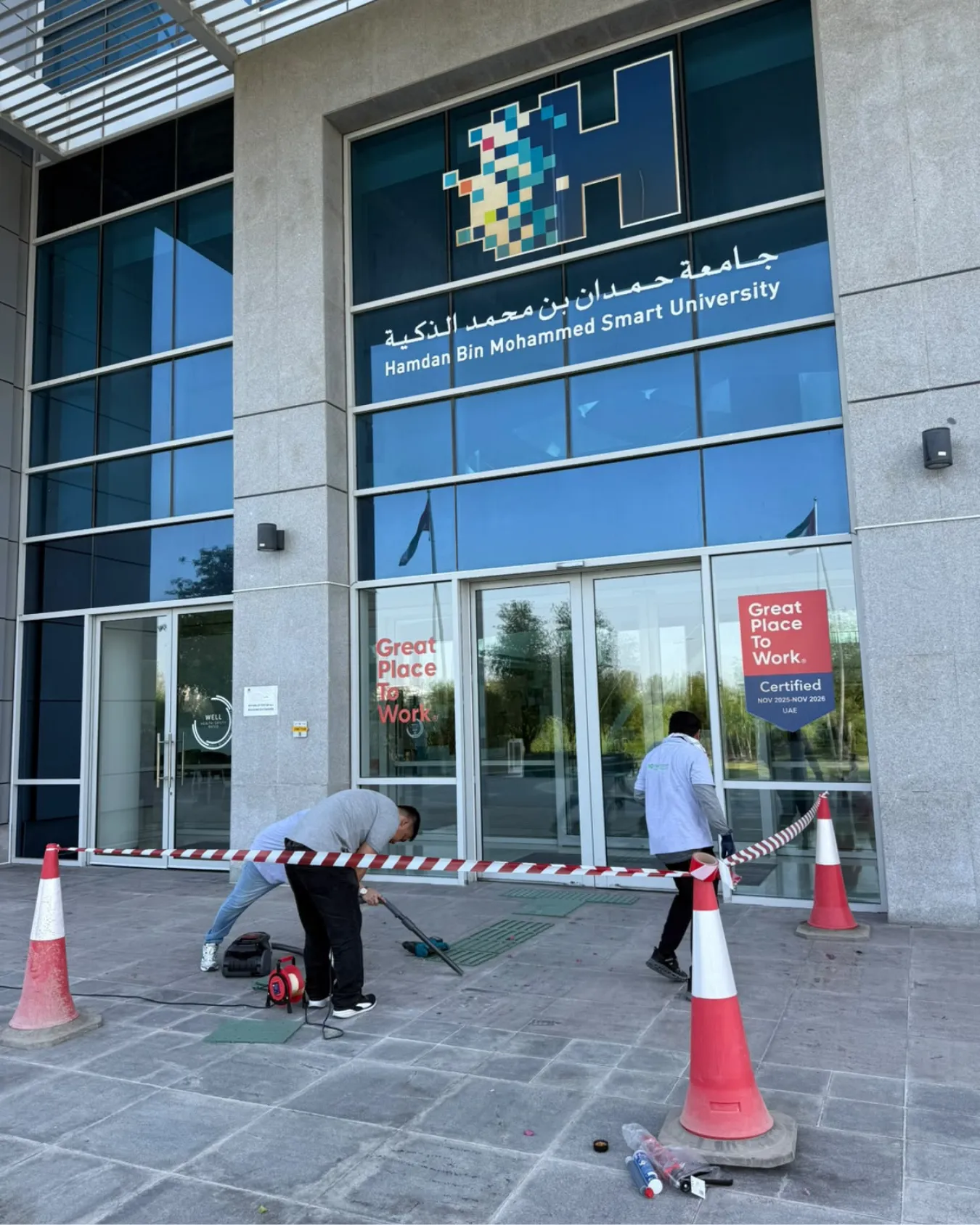
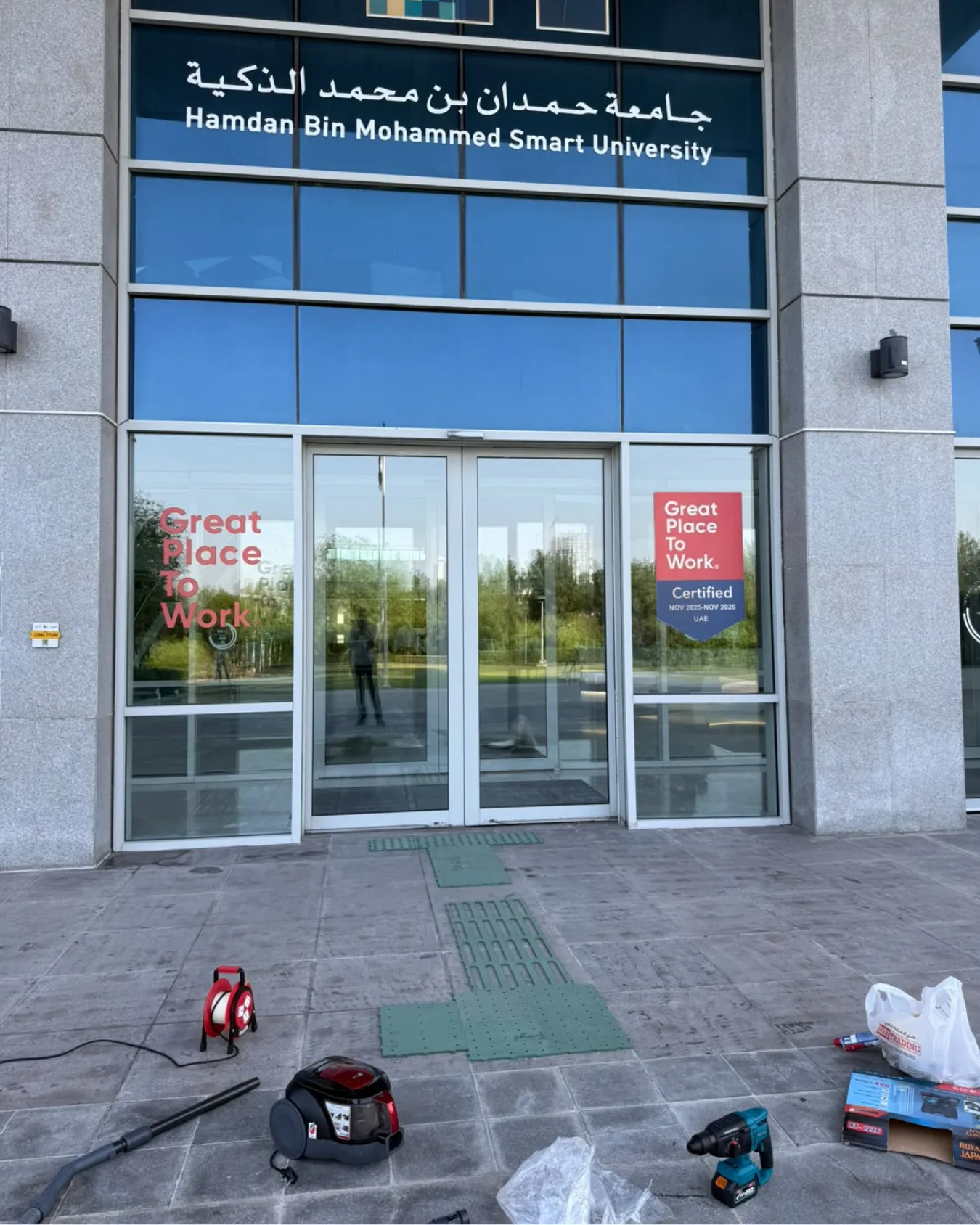
The approach before installation. The paved walkway and entrance zone had no tactile surfaces, leaving visually impaired visitors without a line to follow.
During installation
The Flex Access team setting out and fixing the directional strips and warning studs into the existing paving, working to the surveyed route.
After our service
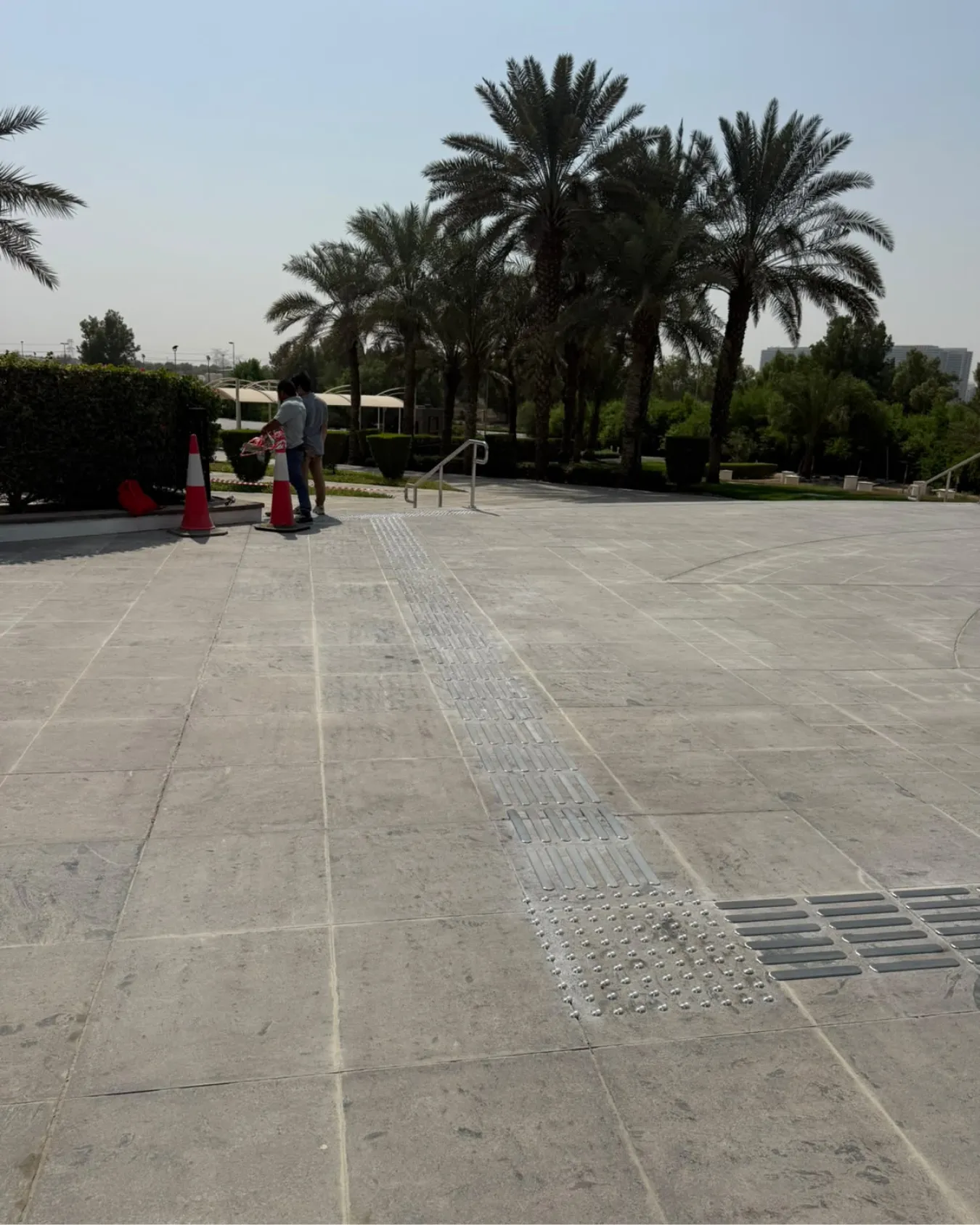
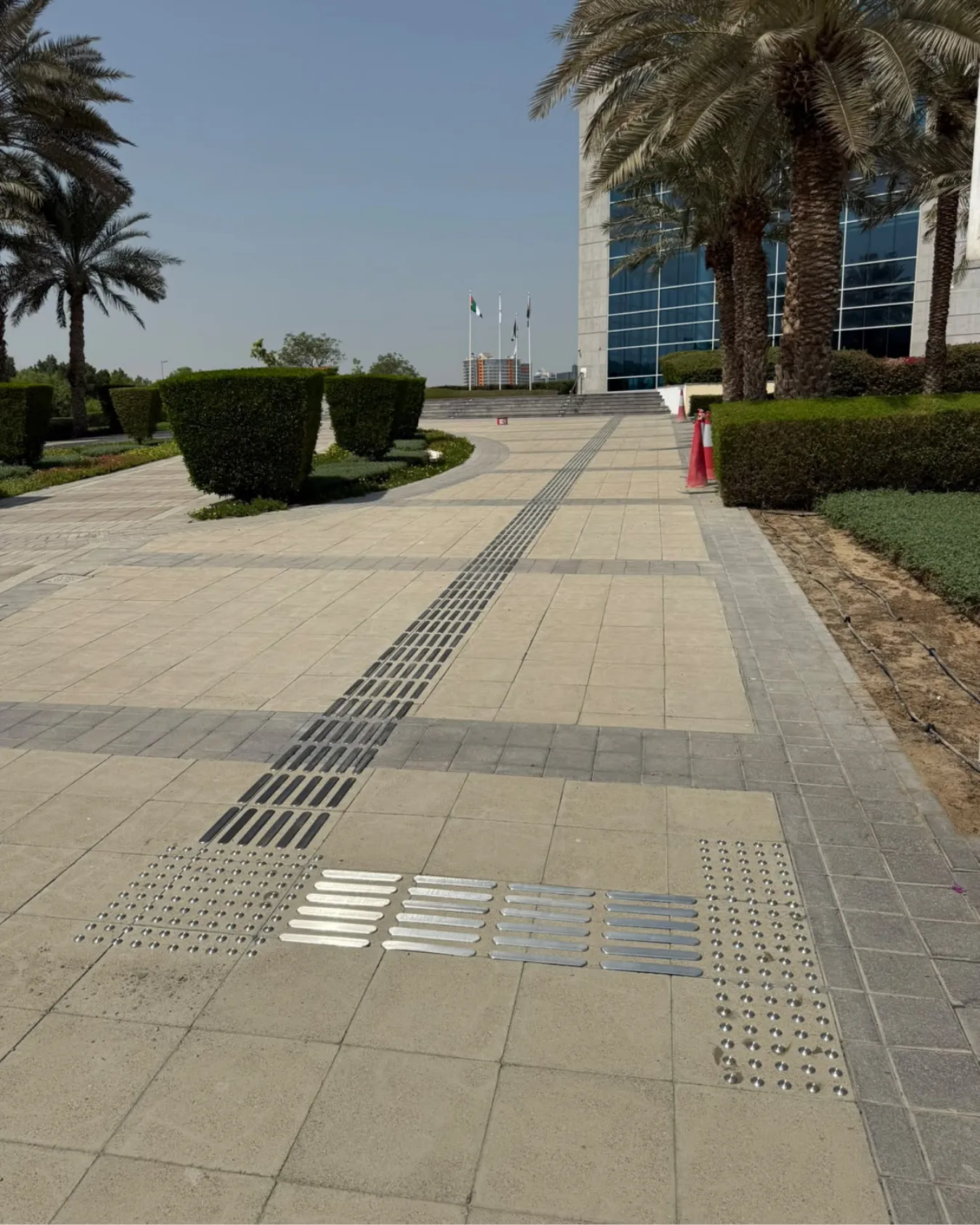
The completed route. Grade 316 stainless steel directional strips run along the walkway and warning studs mark the entrance and the changes in direction.
On site
See the route in action
Follow the approach from the pedestrian walkway to the main entrance and see what a visitor feels underfoot at each stage of the route.
Plan your route
Every visitor should be able to find their way in.
Flex Access plans, supplies and installs tactile indicators for universities, campuses and public buildings across the UAE, in line with the Dubai Universal Design Code. A route can be built in tactile strips, stainless steel tactile studs or tactile tiles and plates, and our team handles the tactile installation from site survey to handover. Tell us about your site and we will show you what your route needs, alongside our full range of accessibility services.
Free site assessment. No obligation.