
Tactile Strips: Stainless Steel and Paving Strips Supplied and Installed in the UAE
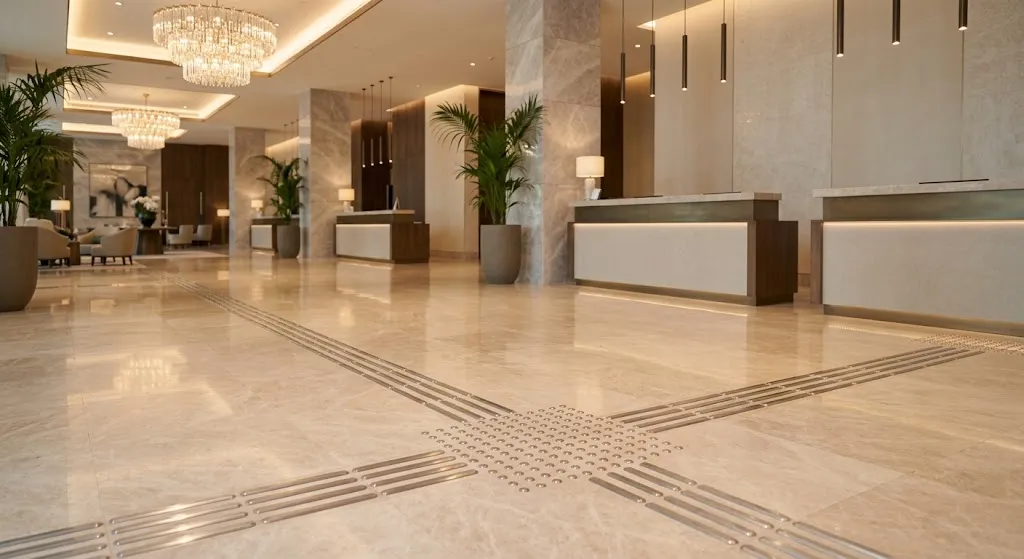
Tactile strips are raised bars that guide people who are blind or have low vision along a safe route. Flex Access supplies and installs stainless steel tactile strips and tactile paving strips across Dubai, Abu Dhabi and the UAE, made and laid to the code of your emirate.
Quick Answer
What are tactile strips?
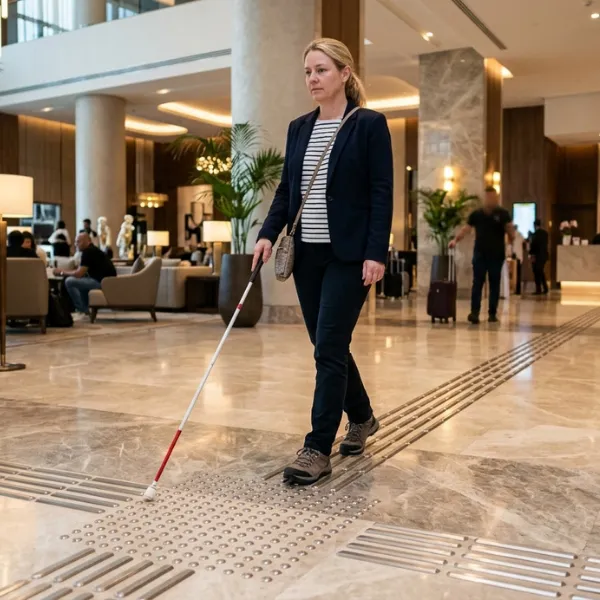
Tactile strips are long raised bars fixed to the floor in the direction people walk. A person who is blind or has low vision follows them with a cane or their feet, from one point to the next, such as from an entrance to a lift or a service counter. In Dubai, the bars must be no more than 4mm high and must stand out from the floor by at least 50 LRV points.
What is a tactile warning strip?
"Tactile warning strip" is used for two different things. Some suppliers mean bars laid across a path to warn of a hazard, a pattern used in the UK. Others mean any tactile surface at a hazard. Under the Dubai Universal Design Code, the warning surface at a hazard is made of raised domes, not bars. So in the UAE, strips guide people towards a stair or ramp, and a band of warning studs tells them where to stop.
Main Types
Two types of tactile strips: stainless steel strips and tactile paving strips
Both create the same guiding route. The difference is how they go into the floor.

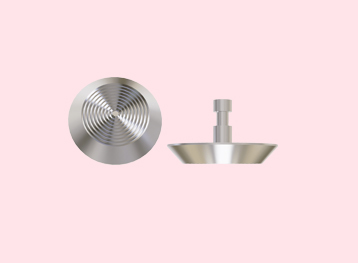
Stainless steel tactile strips
- Individual metal bars, fixed one by one
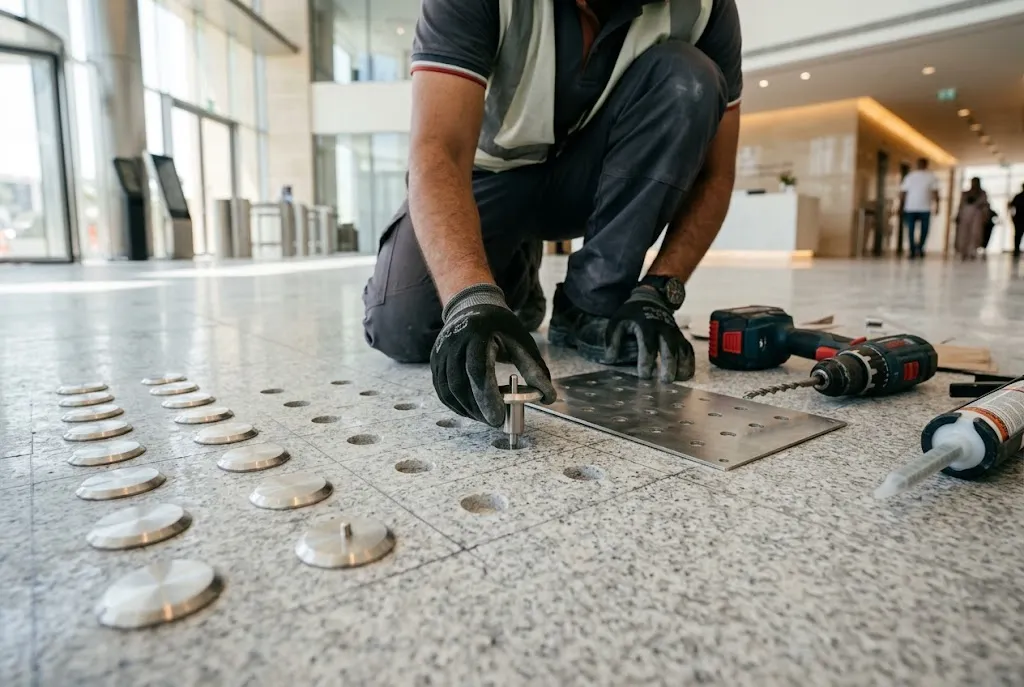
- Drilled into, or stuck onto, your existing floor
- No re-tiling needed
- Discreet, premium look on marble, granite and porcelain
- Best for offices, malls, hotels and government buildings

Tactile paving strips
- Tiles, plates or PU strips with the bars already on them
- Laid into the floor, or fixed on top as one unit
- Fast to lay over long distances
- Strong, bold colour that is easy to see
- Best for sidewalks, car parks, stations and new floors
| Stainless steel strips | Tactile paving strips | |
|---|---|---|
| What it is | Single raised bars | A tile, plate or PU strip with raised bars |
| How it is fixed | Drill and fix, poly sleeve, self-adhesive or screw | Laid in mortar, screwed or self-adhesive |
| Floor type | Existing stone, tile, concrete or carpet | New floors, outdoor paving, or on top of existing floors |
| Indoor or outdoor | Both (SS316 outdoors) | Both |
| Look | Discreet, metallic | Bold, coloured |
Our Range
Our stainless steel tactile strips
Every strip is available in SS316 marine grade or SS304, with a brushed finish or PVD colours (rose gold, yellow gold, blue and black).
Drill-fit strip, linear top
Our standard tactile strip. A stem underneath is set into a drilled hole with strong adhesive, so it stays put for years.
Ask on WhatsApp
Diamond-pattern strip
A diamond texture on top gives extra grip underfoot, which helps in areas that get wet or dusty.
Ask on WhatsApp
Pressure-fit strip with poly sleeve
A plastic sleeve grips the drilled hole tightly, giving a firm fix without waiting for glue to set.
Ask on WhatsApp
Self-adhesive strip
Peel and stick onto a clean, smooth floor. The quickest way to add a guiding route while the building stays open.
Ask on WhatsApp
Carpet strip, screw fix
Screwed through the carpet into the floor below, so the route stays firm and easy to feel on soft flooring.
Ask on WhatsApp
Cast-finish strip
A heavier cast strip with a textured finish, made for outdoor walkways, plazas and transport areas.
Ask on WhatsAppOur Range
Our tactile paving strips
Tactile paving strips come with the bars already formed on a tile, plate or PU strip. They are quick to lay over long routes and come in bold colours.
Porcelain directional paving tile
A 300 x 300mm porcelain tile with raised guiding bars, laid in cement or tile adhesive like a normal tile.
Ask on WhatsApp
Stainless steel directional plate
A 300 x 300mm stainless steel plate with raised bars, screwed onto an existing floor. No re-tiling needed.
Ask on WhatsApp
PU tactile strip, self-adhesive
A light, UV-stable polyurethane strip that peels and sticks. Easy to fit, easy to replace.
Ask on WhatsApp
Yellow PU tactile strip
A bright yellow polyurethane strip that stands out clearly on grey paving and concrete.
Ask on WhatsAppNeed full warning and directional tiles for a whole floor? See our tactile tiles and plates.
Size and Specifications
Tactile paving strips size and specifications
Our tactile strips are made to the sizes UAE codes ask for, so the route is easy to feel and passes inspection.
| Specification | Detail |
|---|---|
| Strip length | 280 mm (single stainless steel strip) |
| Width at the top | 30 mm |
| Width at the base | 40 mm |
| Height | 4 mm, the maximum under the Dubai Universal Design Code |
| Width of the guiding route | At least 400 mm |
| Paving strip tiles | 300 x 300 mm porcelain or stainless steel |
| Materials | SS316 marine grade, SS304, PU, porcelain |
| Top pattern | Linear grooves or diamond anti-slip |
| Finishes and colours | Brushed steel, PVD rose gold, yellow gold, blue, black. PU in grey, terracotta, yellow, blue, black |
| Fixing options | Drill and adhesive, pressure fit, self-adhesive, screw (carpet), laid in mortar (tiles) |
| Warranty | 5 years |

Uses
Where tactile strips are used
Tactile strips for stairs
Strips lead people across the floor to the stair. At the top and bottom of every flight, a band of tactile warning studs tells them to stop. Each step edge should also have a contrasting anti-slip nosing, so the steps are easy to see.
Tactile strips for ramps
Strips guide people to the start of the ramp, and warning studs mark the top and bottom. This tells a cane user exactly where the slope begins and ends.
Tactile strips for sidewalks
Outdoors, we use porcelain paving strips, cast or SS316 stainless steel strips, or screw-fixed PU. They handle UAE heat, sun and sand. The route leads to crossings, bus stops and building entrances, and ends at a warning surface where the walkway meets traffic.
Tactile strips for blind and low-vision users
A cane user sweeps the cane across the strips and follows them forward. Strips give a clear path across open spaces, like lobbies and plazas, where there is no wall or kerb to follow.
Warning strips at stairs: under the Dubai Universal Design Code, the warning at a stair is a band of raised domes, not bars. If a supplier offers bar-shaped "warning strips" for your stairs, check they meet your emirate's code first. We specify the right pattern for each point on your route.
Made to Code
Laying tactile strips to UAE code
Each emirate follows its own building code, under the federal law on the rights of People of Determination. We check your route against the code that applies where your building is.
| Emirate | Code we follow | What it means for tactile strips |
|---|---|---|
| Dubai | Dubai Universal Design Code, Section 5.3 Tactile Surfaces | Directional bars run parallel to the direction of travel, end at a warning surface before any hazard, are no more than 4mm high and contrast with the floor by at least 50 LRV points |
| Abu Dhabi | Abu Dhabi International Building Code 2013, with Abu Dhabi/ICC A117.1 | Tactile surfaces follow Abu Dhabi/ICC A117.1. We confirm the detailed layout for your site at the consultation |
| Sharjah and Northern Emirates | UAE Universal Design Code | The federal tactile surfaces requirements, confirmed for your project |
| All emirates | Federal Law No. 29 of 2006 | The right of People of Determination to safe, independent access |
How a good strip route is laid
Start somewhere useful
An entrance, a car park or a bus stop.
Run straight and parallel
Bars point the way people walk, laid from a template so spacing is even.
Turn at decision points
A small warning pad marks every turn or junction.
End at a destination
A lift, counter or door, never a wall, with a warning surface before any hazard.
Contrast matters as much as texture
People with low vision need to see the route, not just feel it. Brushed steel strips stand out on dark granite. On light marble or porcelain, a darker PVD finish or a yellow PU strip is often the better choice.
We check the contrast against your actual floor before ordering, so the route passes inspection the first time.
Choosing a Strip
Choosing the right tactile strip for UAE conditions
| SS316 steel | SS304 steel | PU | Porcelain | |
|---|---|---|---|---|
| Heat and sun | Excellent | Excellent | Good, UV-stable | Excellent |
| Sea air and pool areas | Excellent | Not recommended | Good | Very good |
| Heavy foot traffic | Excellent | Very good | Good | Very good |
| Existing floor | Yes | Yes | Yes | No, laid as new |
| Cost level | Higher | Mid | Lower | Mid |
Outdoor and coastal
SS316 or cast steel strips, porcelain paving strips, or screw-fixed PU.
Indoor buildings that stay open
Self-adhesive steel or PU strips, fitted with no drilling.
Premium lobbies
Brushed or PVD stainless steel strips, drill-fitted into the stone.
Supply Options
Supply only, or supplied and installed
Supply only
For contractors with their own teams. We supply the strips you need, with datasheets and samples for approval.
Supply and install
You give us the layout. We supply, install and check every strip before handover.
Full service
We visit the site, plan the route to code, supply, install and give you the compliance documents.
What you get with every order
See how we fit each type on our tactile installation service page.
Case Study
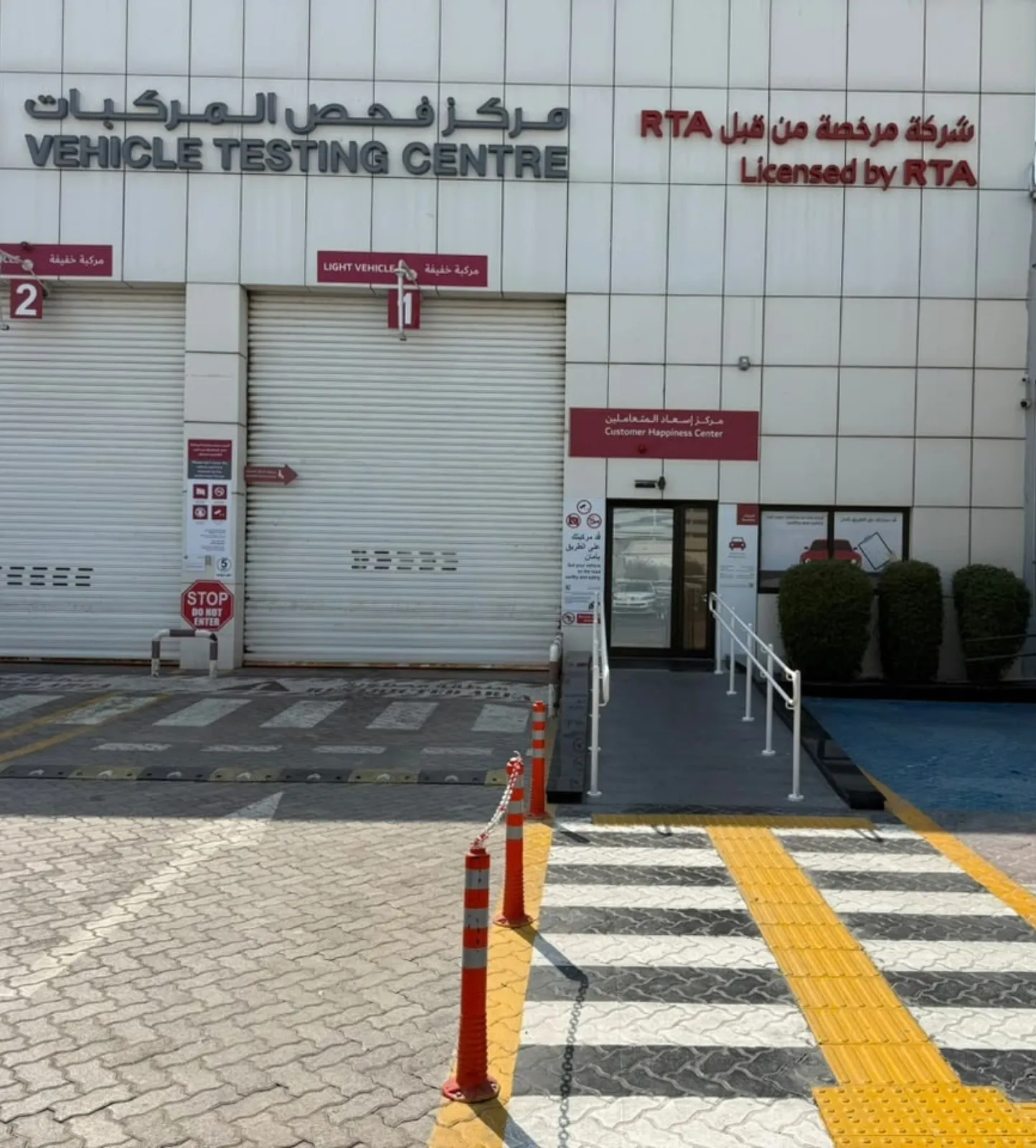
Stainless steel tactile strips at AG Cars Vehicle Testing Centre, Dubai
The challenge
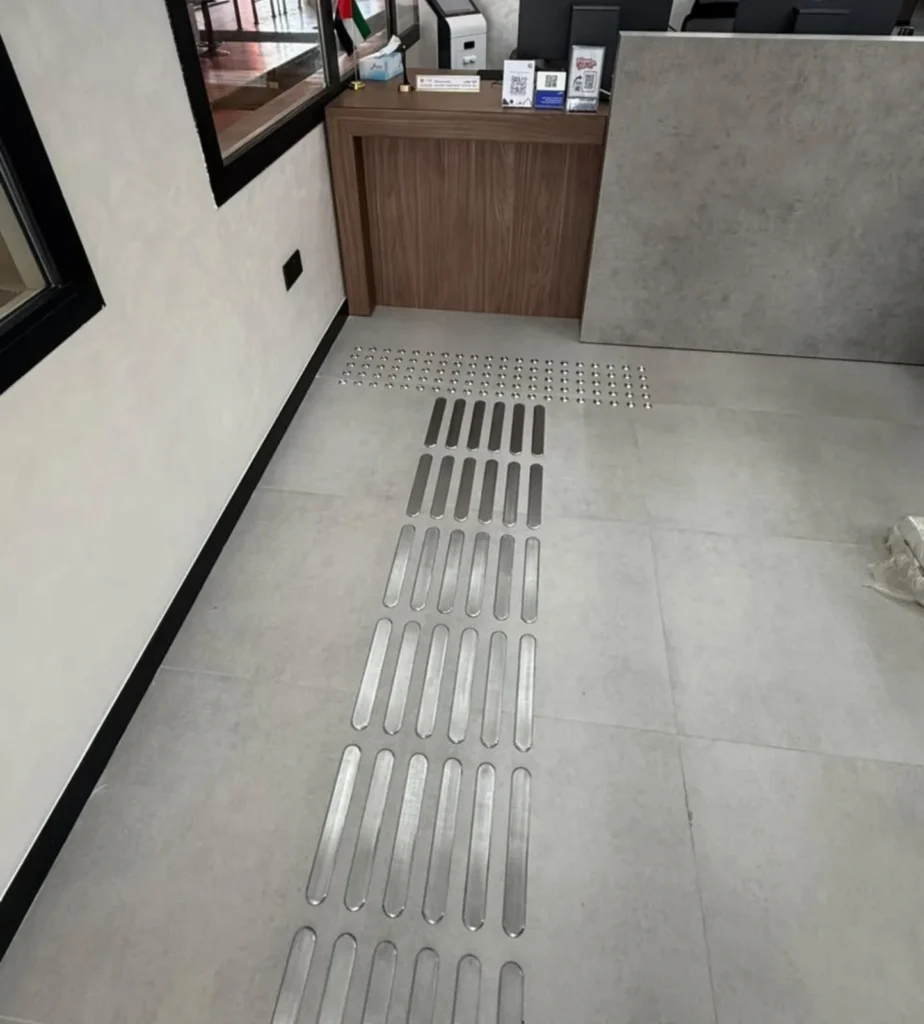
The centre had no tactile route at all. Visitors with a visual impairment could not find their way from the entrance to the service counters, or tell where the walkway met the vehicle lanes.
What we did
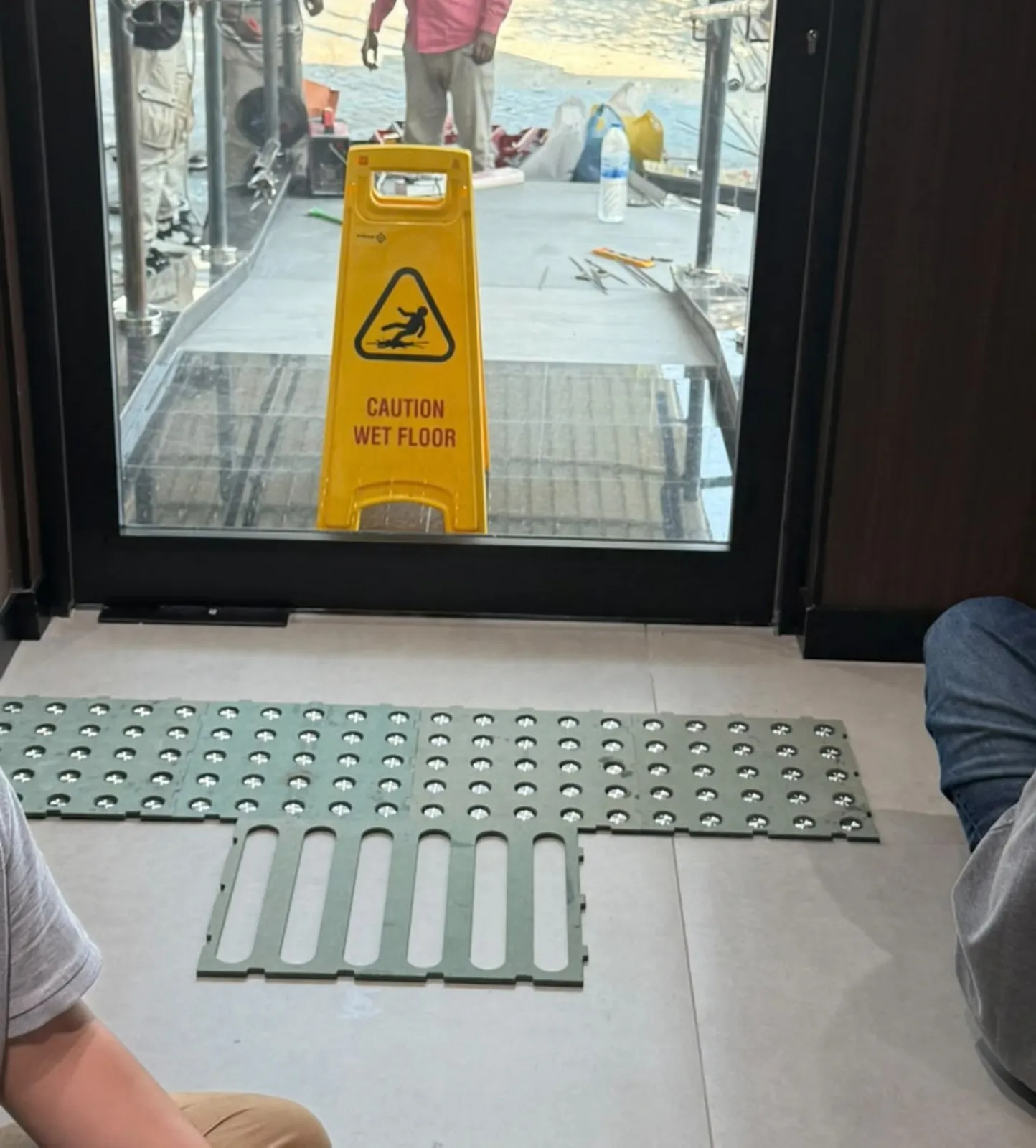
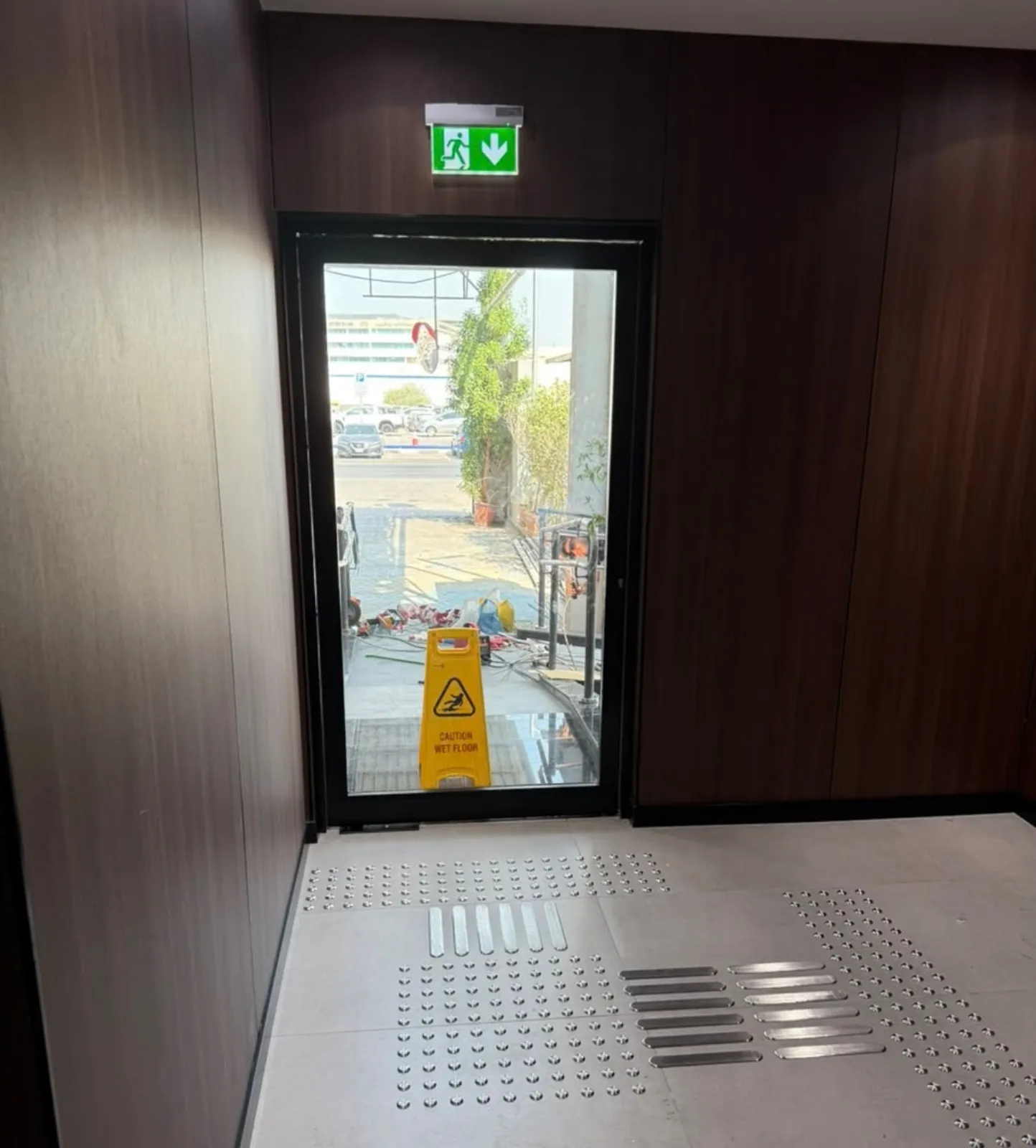
Inside the service hall, we fitted SS316 stainless steel directional strips from the entrance to the service counters, with warning studs at every stop and turn. The strips went into the existing floor tiles, so the original floor was kept. Outside, we laid yellow tactile paving along the walkways and at the vehicle crossings.
The result
Visitors who are blind or have low vision can now walk to the service counter on their own, on a route that meets the Dubai Universal Design Code.

Want to see more? Explore our latest case studies to see tactile projects we have completed across the UAE.
Planning a tactile strip route?
Book a free consultation. We will plan your route, check your floor and the code for your emirate, and send you a clear quote.
Frequently Asked Questions
FAQs
What is a tactile warning strip?
The term is used in two ways. Some suppliers sell bars laid across a path as a warning, a pattern used in the UK. Under the Dubai Universal Design Code, the warning surface at a hazard is a band of raised domes. In the UAE, strips are used to guide people, and studs or dome tiles are used to warn them.
What are tactile strips used for?
Tactile strips create a path that people who are blind or have low vision can follow with a cane or their feet. They lead from one place to another, such as from an entrance to a lift, across open areas with no wall to follow.
What are tactile tiles used for?
Tactile tiles warn people of hazards and guide them along a route. Tiles with raised bars, often called tactile paving strips, do the guiding. Tiles with domes do the warning. See our tactile tiles and plates for the full range.
What are the different types of tactile tiles?
There are two main types. Directional tiles have raised bars and guide people along a route. Warning tiles have raised domes and tell people to stop before a hazard. Both come as individual strips or studs, as tiles laid into the floor, or as plates fixed on top.
What are the specifications of tactile tiles and strips?
Our stainless steel strips are 280mm long, 30mm wide at the top, 40mm at the base and 4mm high, in SS316 or SS304. Paving strip tiles are 300 x 300mm in porcelain or stainless steel. All of them meet the 4mm height limit of the Dubai Universal Design Code and carry a 5-year warranty.
What size are tactile paving strips?
Each bar is 30mm wide at the top and 40mm at the base, and no more than 4mm high. The guiding route made by the strips should be at least 400mm wide.
Can tactile strips be used on stairs?
Strips lead people to the stairs. At the top and bottom of each flight, the warning surface should be a band of raised studs or dome tiles, not strips. Each step edge should also have a contrasting anti-slip nosing.
Are tactile strips suitable for outdoor sidewalks in UAE heat?
Yes. For outdoor routes, use SS316 or cast steel strips, porcelain paving strips, or screw-fixed PU. These handle heat, sun, sand and sea air. Self-adhesive strips are best kept indoors.
Can tactile strips be installed on an existing floor?
Yes. Stainless steel strips are drilled into, or stuck onto, your existing floor, and steel or PU paving strips can be fixed on top. Only porcelain paving strips need the floor to be laid new.
Do you supply tactile strips only, without installation?
Yes. We supply tactile strips to contractors with their own teams, with datasheets and samples for approval.

Written By
Nouh Aqra
Accessibility Consultant and Managing Director at Flex Access, with more than 10 years of experience delivering accessibility and mobility solutions across the UAE, including tactile installation and wayfinding projects reviewed against the Dubai Universal Design Code and Federal Law No. 29 of 2006.
More Tactile Solutions
Explore our other tactile products and services

Book your free tactile consultation
Tell us about your building. We will plan your strip route, check your floor and the code for your emirate, and send you a clear written quote.