
Handicap Toilet & Accessible Bathroom Installation in Dubai and the UAE
A bathroom that is compliant on paper is not the same as a bathroom that works. Flex Access designs, installs and audits accessible bathrooms and handicap toilets to the Dubai Universal Design Code and Abu Dhabi International Building Code, specified to the exact section, checked from a wheelchair before we call it finished.
 Trusted across the UAE
Quick answer
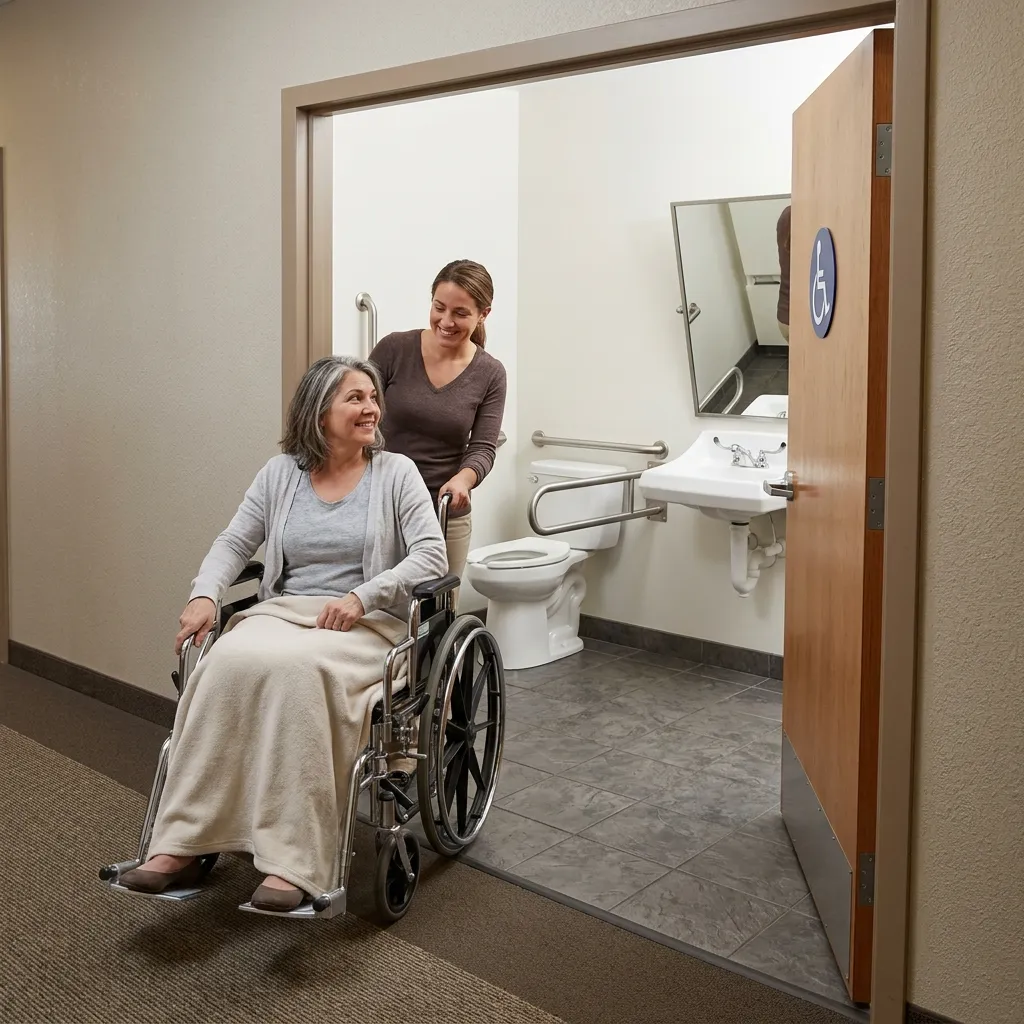
An accessible bathroom, also called a handicap toilet, disabled toilet or PWD toilet, is a bathroom built so a wheelchair user or person with limited mobility can enter, turn, transfer onto the toilet and exit safely and independently. In the UAE this means a minimum 152.5 cm turning circle, a door at least 81.5 cm wide that swings outward or slides, grab bars fixed at 840 to 915 mm, and an alarm pull cord that reaches floor level, specified under the Dubai Universal Design Code and the Abu Dhabi International Building Code. Flex Access designs, installs and audits accessible bathrooms to these exact standards across the UAE.
What "Handicap Toilet," "Disabled Toilet" and "Accessible Toilet" Actually Mean
These terms get used interchangeably, and in practice they refer to the same facility. It is worth being precise about the language before getting into specifications.
Accessible toilet vs disabled toilet vs handicap toilet
The preferred institutional term in the UAE is accessible toilet or accessible sanitary facility. Disabled toilet and handicap toilet remain the common search terms and still appear in legacy building documents. All three describe the same facility, built to the same code.
What PWD toilet and People of Determination mean
PWD toilet stands for a toilet for a Person With a Disability. In the UAE, the official legal term is People of Determination, defined under Federal Law No. 29 of 2006 Concerning the Rights of People of Determination, which guarantees the right to access public and private spaces with dignity.
What HC toilet means
HC toilet is shorthand for handicapped toilet, commonly seen on architectural drawings, signage schedules and facilities management systems in the UAE. It refers to the same accessible toilet defined under the Dubai Universal Design Code and Abu Dhabi International Building Code.
Two more questions worth answering directly. Can a normal person use an accessible washroom? Yes, it is not legally restricted to people with disabilities, carers, parents with young children and anyone needing the extra space can use it, though it should stay prioritised for those who need it. What does accessible bathroom mean in practice? A bathroom designed and built to let a wheelchair user or person with a mobility disability enter, manoeuvre, use the toilet and exit independently, where the specific dimensions, fixtures, grab bars and alarm system are what make it genuinely accessible rather than simply larger than standard.
You will also see this facility called a handicap bathroom, handicap washroom, handicapped washroom, disable washroom, disable toilet, disabled WC or handicap WC in everyday conversation and in search results. All of these are informal names for the same accessible toilet defined under UAE code. Some facilities management documentation also refers to it as a people of determination toilet, reflecting the terminology used in UAE federal law. If you have searched hc toilet meaning, it is shorthand for handicapped toilet, covered above.
Where an Accessible Toilet Is Legally Required in the UAE
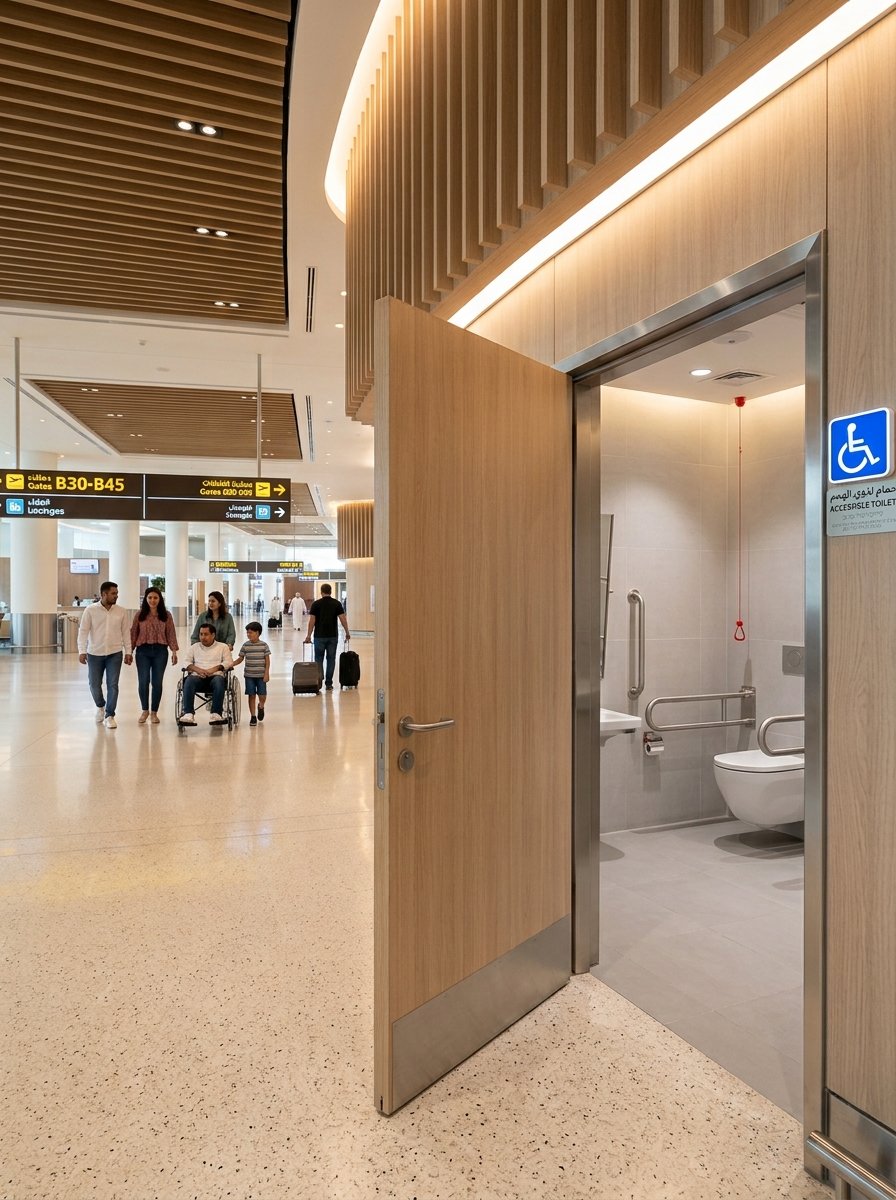
Under the Dubai Universal Design Code, an accessible toilet is mandatory wherever a bank of male and female toilets is provided. Every time standard toilet facilities are provided, an accessible unisex toilet must be provided at the same location. That requirement applies to transport facilities such as airports, metro stations and bus terminals, hospitals and clinics, schools and colleges, mosques, hotels and tourist attractions, leisure facilities including art galleries, shopping malls, gyms and sports venues, and commercial office buildings.
For Abu Dhabi businesses pursuing the DAMJ Award, the formal recognition for organisations excelling in accessibility and inclusion, compliant accessible bathroom provisions are assessed as part of the audit, and non-compliance in this area directly affects scoring. Flex Access also supports clients through DAMJ Award preparation.
The liability point is straightforward. If an incident occurs inside an accessible toilet that does not meet code, a fall that could not be reported because there was no alarm system, or an injury from a grab bar that could not be reached, the building owner carries direct liability exposure. Compliance here is risk management, not just an ethical position.
Compliant on Paper, Unusable in Practice
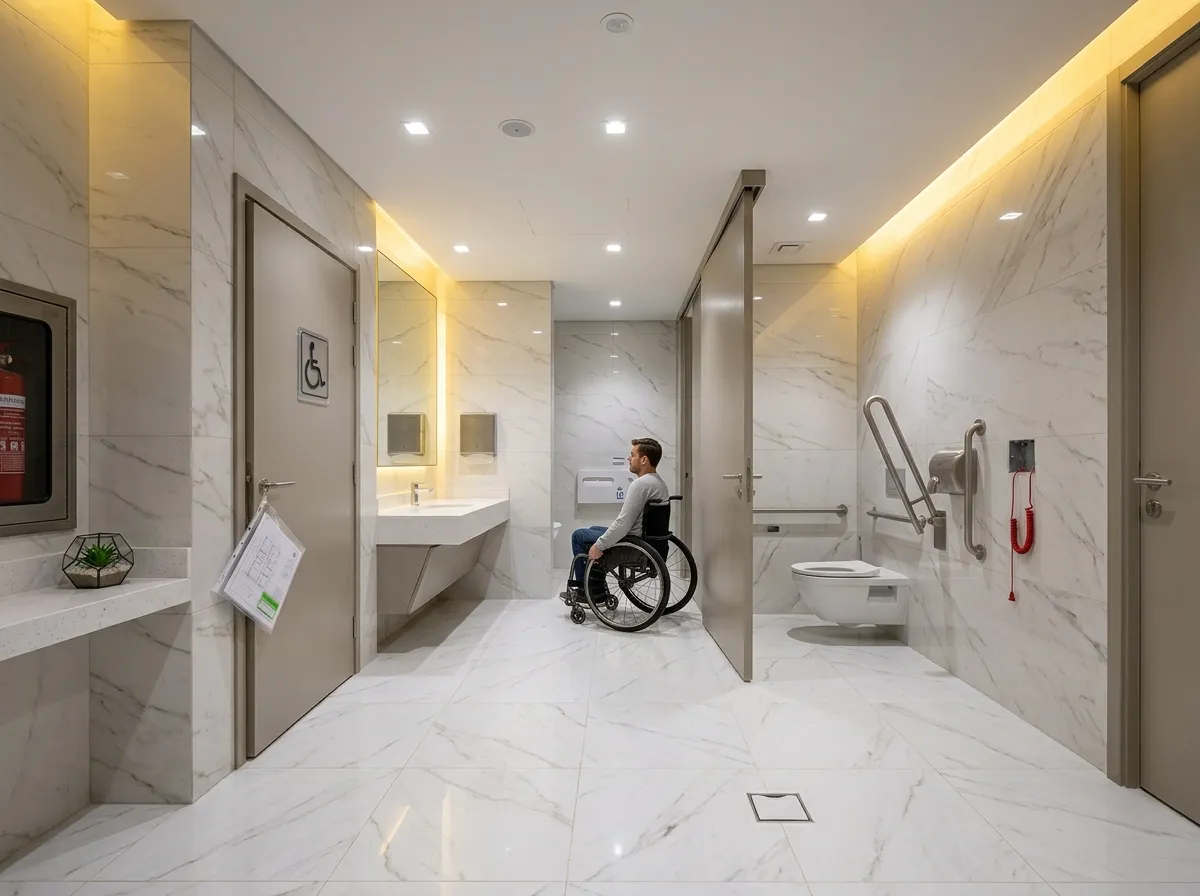
In my work across the UAE, the most common problem is not a building that completely lacks a handicap toilet. It is a building that has one, professionally finished, signposted, visible on the architect's drawings, that fails on specifics. The grab bars are at the wrong height. The door swings inward. There is no alarm system. The turning circle measures 140 centimetres instead of 152.5. On paper, the box is ticked. In practice, the toilet cannot be used safely or independently by the person it was designed for. This is the gap Flex Access is built to close, between a drawing that passes review and a room that actually works.
— Nouh Aqra, Accessibility Consultant, Flex Access
Every Fixture, Specified and Installed to Code
An accessible bathroom is not one product, it is a coordinated set of fixtures and clearances working together. Flex Access specifies, supplies and installs every element as one project, not a list of separate purchases.
Grab Bars
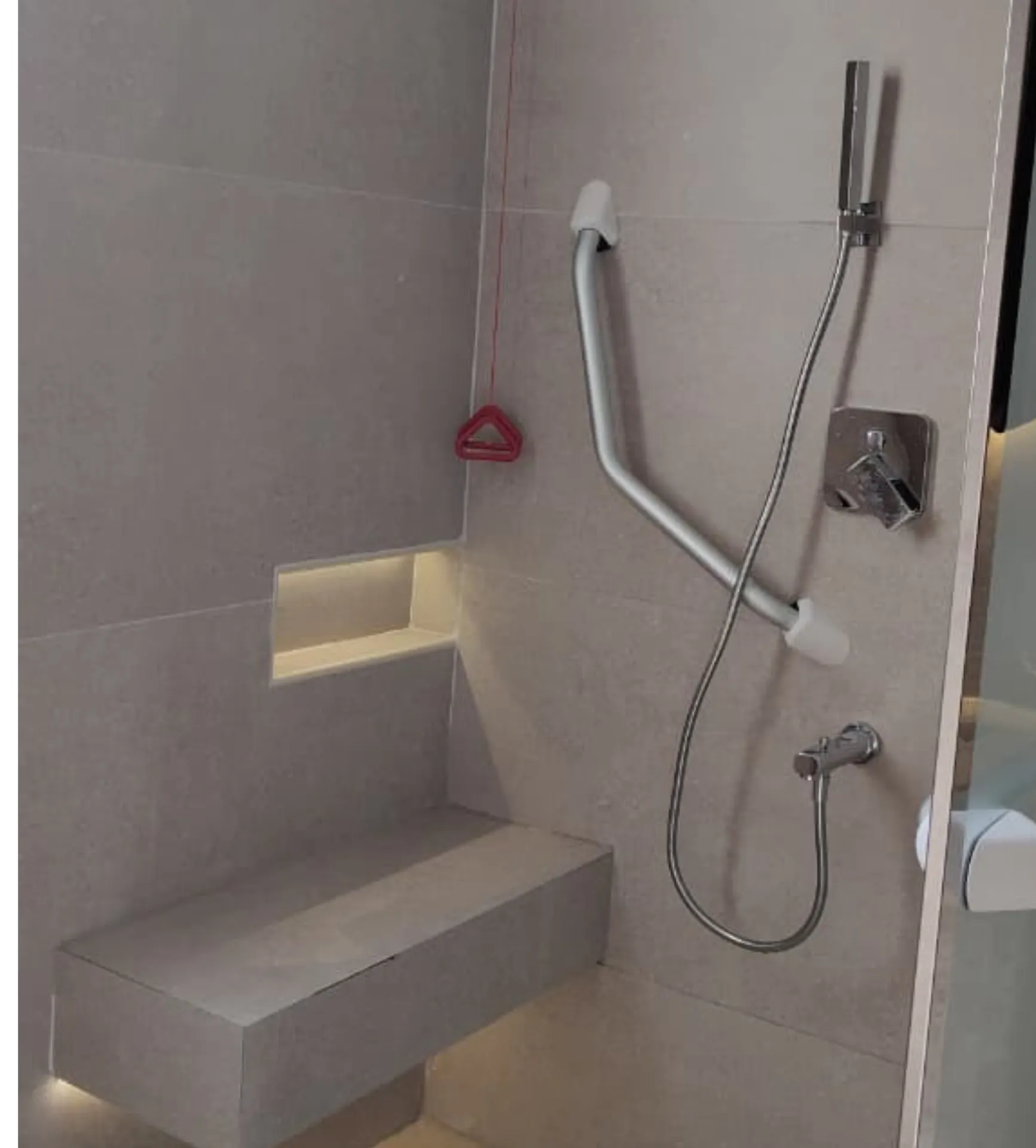
Side, rear and swing-up bars, fixed at code height with verified structural backing.
View grab bars →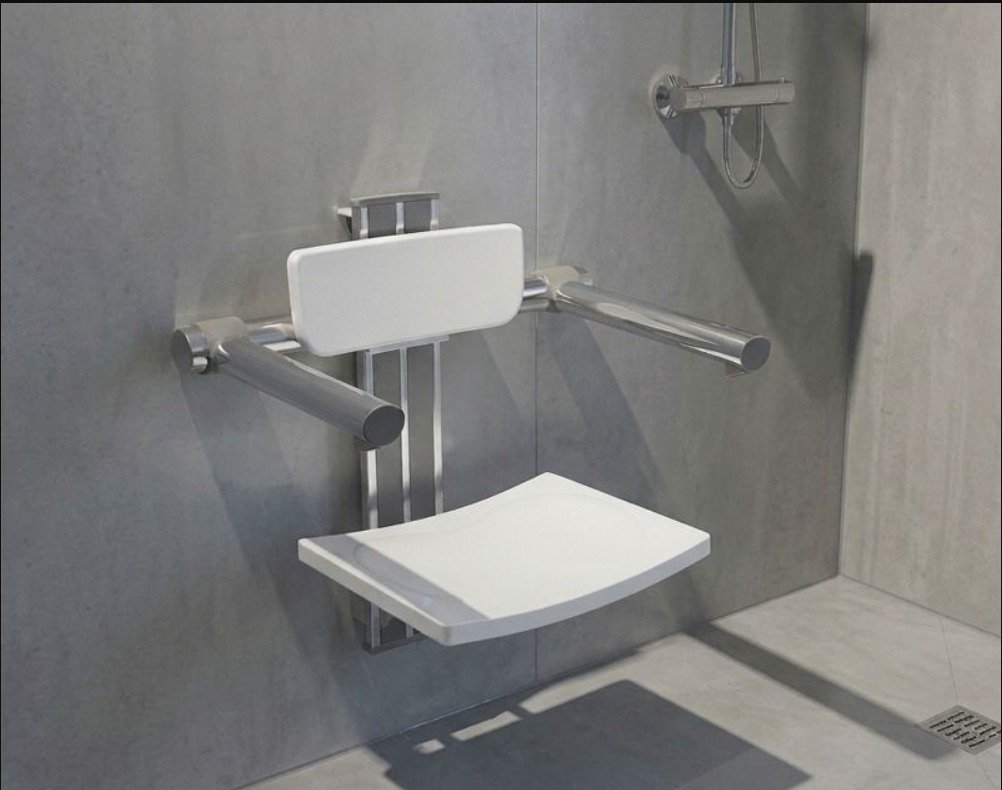
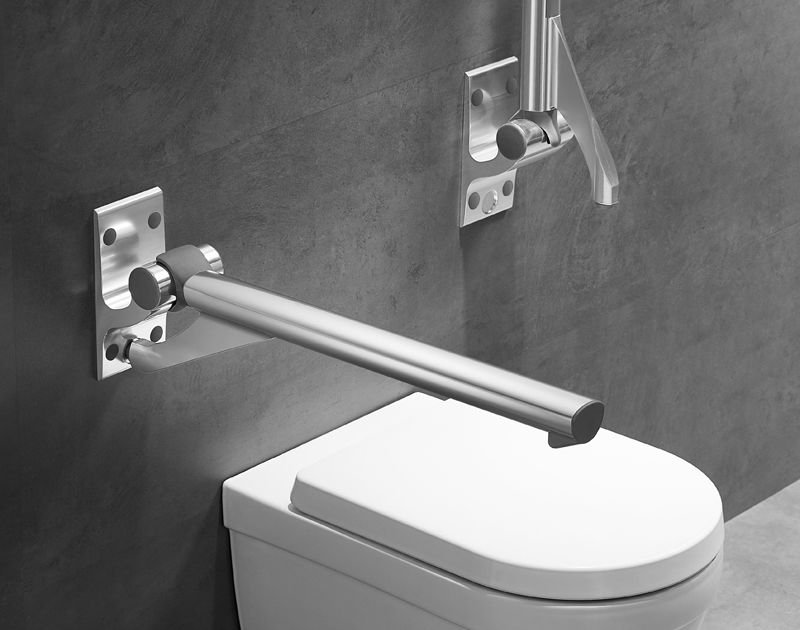
Toilet Support Arms
Fixed and swing-away support arms for safe, independent transfer.
View support arms →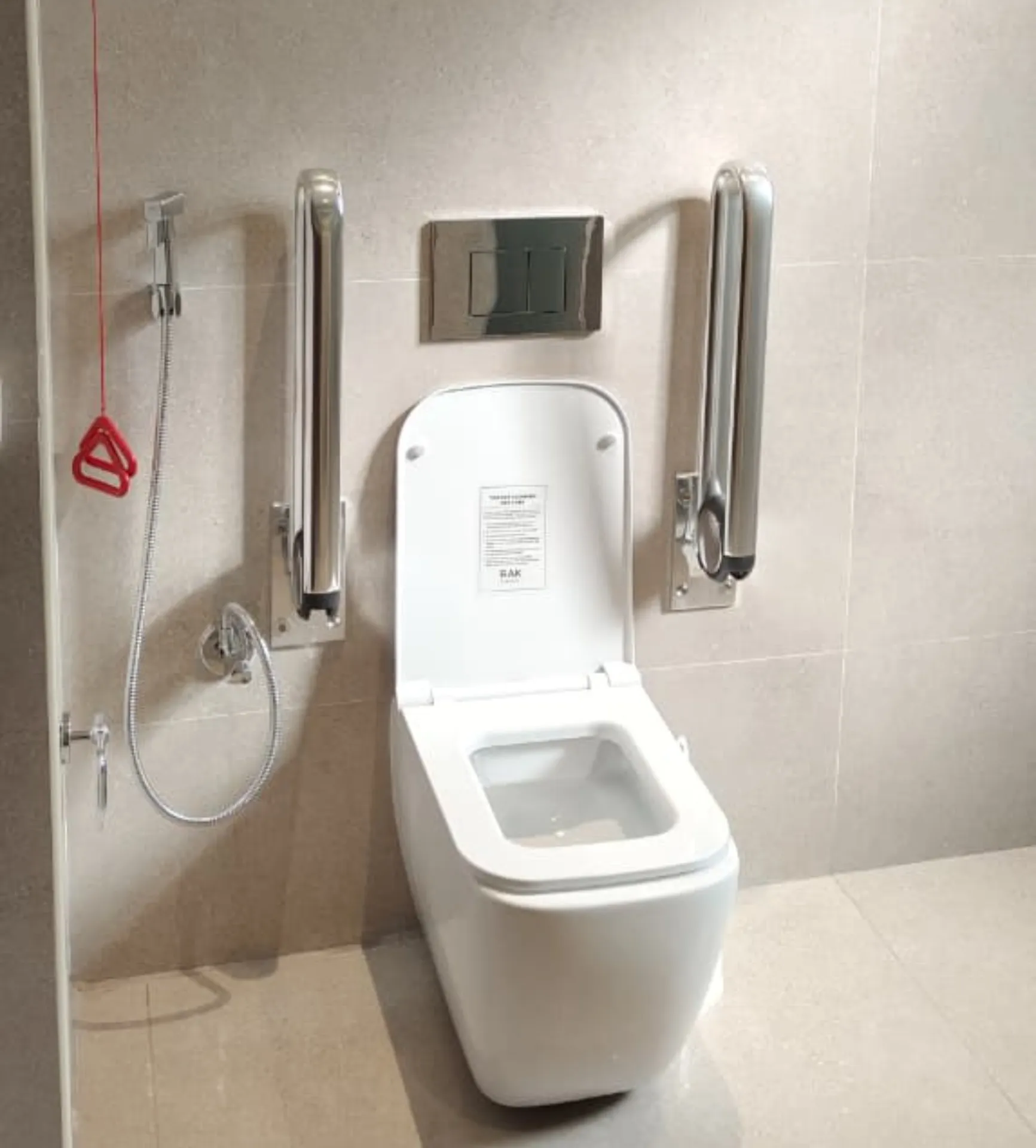
Disabled Toilet Alarms
Audio and visual alarm systems with a pull cord that reaches floor level.
View alarm systems →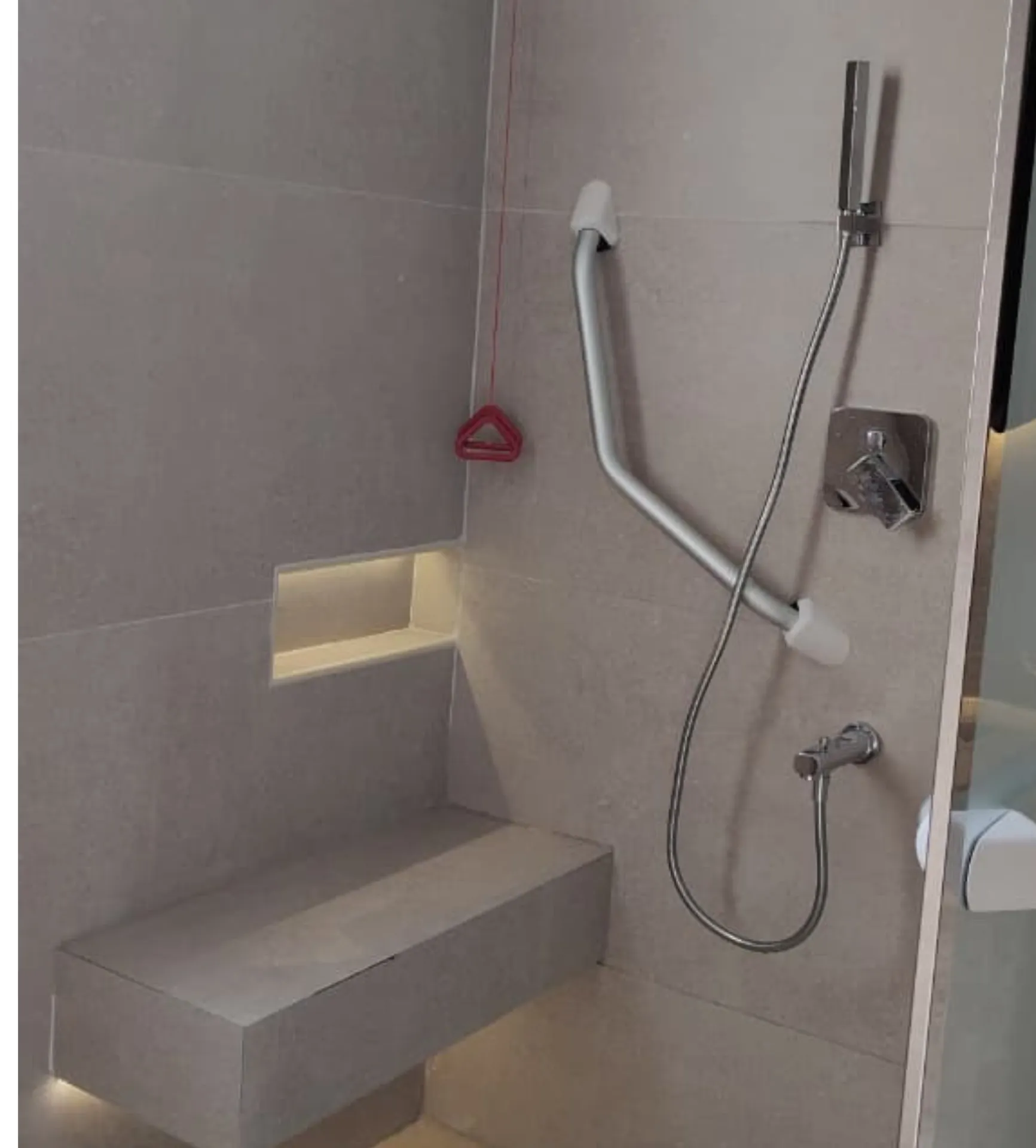
Roll-In Showers
Level-access, non-slip transfer and turning showers built to the correct clear widths.
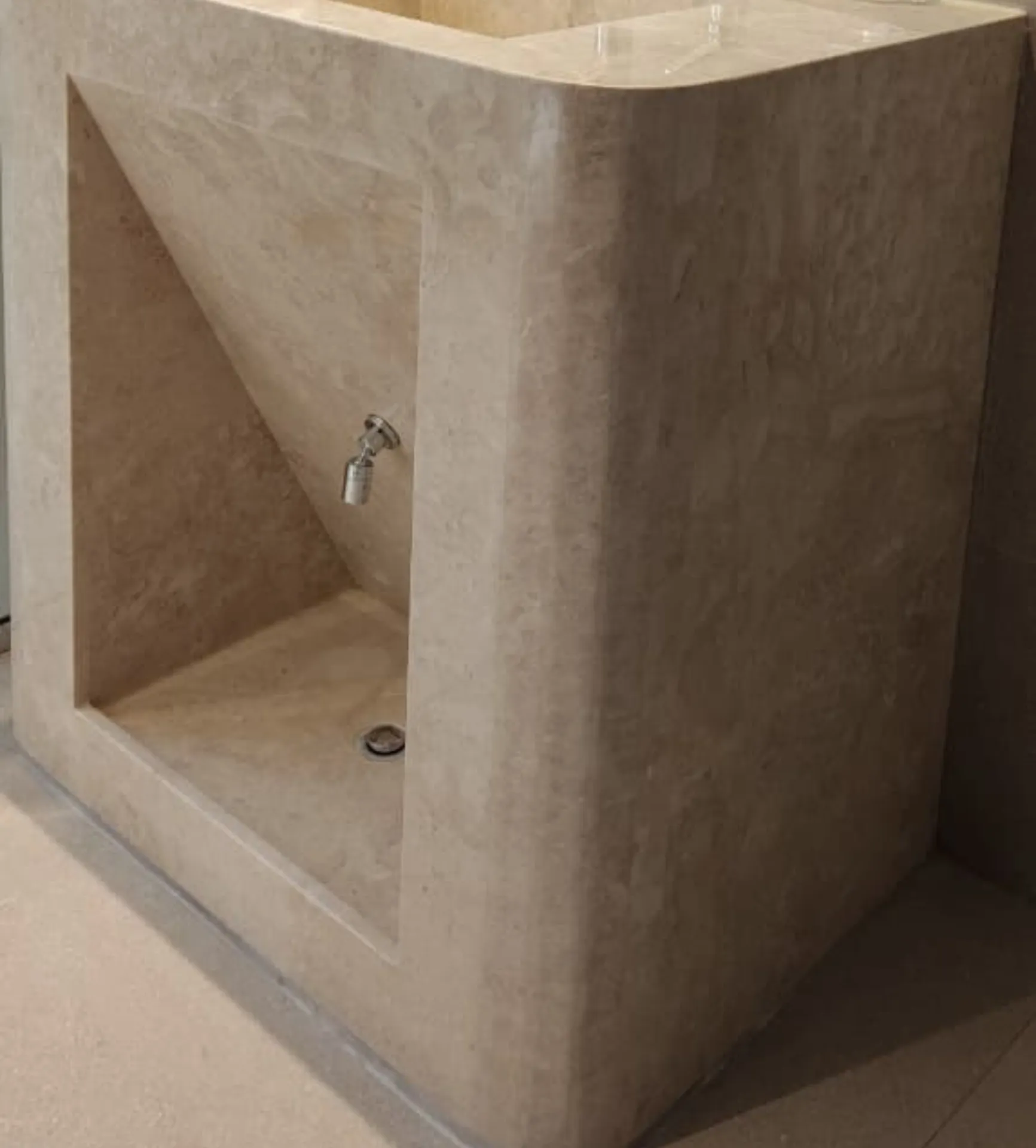
Accessible Washbasins
Lever or sensor taps, correct knee clearance, positioned within seated reach.
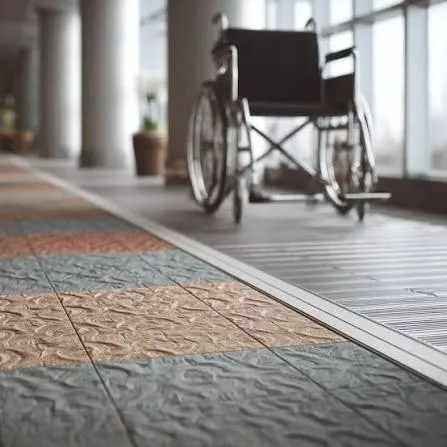
Non-Slip Flooring & Signage
Wet-rated slip-resistant flooring and International Symbol of Accessibility signage.
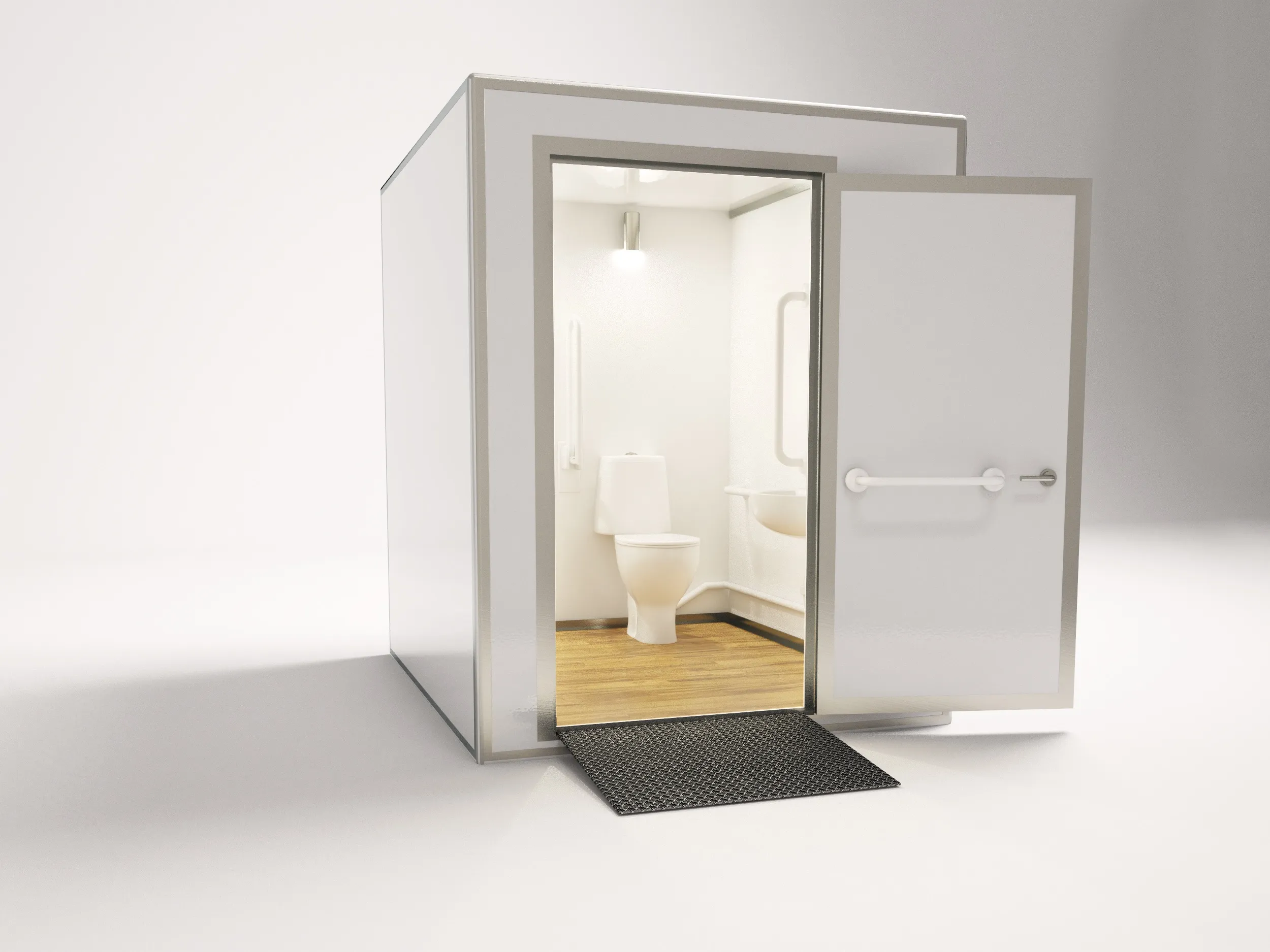
Modular Accessible Toilet Pods
Prefabricated accessible washroom pods for construction sites, events and fast retrofits with no existing room to convert.
Not Just Compliant, Actually Usable
Most contractors treat an accessible toilet as a checklist. We treat it as a room a real person has to use, often unassisted, sometimes in an emergency. Two things set our process apart from most accessible bathroom installers working in the UAE.
We cite the exact code section, every time
Not one accessible bathroom provider we reviewed in the UAE market cites the actual Dubai Universal Design Code or Abu Dhabi International Building Code section numbers on their site. We do, in the specification, in the quote and on the finished drawing, so what you approve is traceable to the regulation it satisfies.
We test the room from a wheelchair before sign-off
A drawing review cannot catch a door that will not clear once furniture is in place, or a changing table that cannot fold down without moving a wheelchair first. We do a physical, in-room test before handover, not just a paper check.
Five Steps From First Call to Sign-Off
Every project follows the same five-stage sequence, from a free assessment through to a wheelchair-tested handover, so you always know what stage the work is at and what happens next. We do not start construction until you have approved a written, code-referenced quote, and we do not call a project finished until the room has been tested in person, not just checked against a drawing.
Assessments are typically scheduled within 2 to 3 business days of your first call.
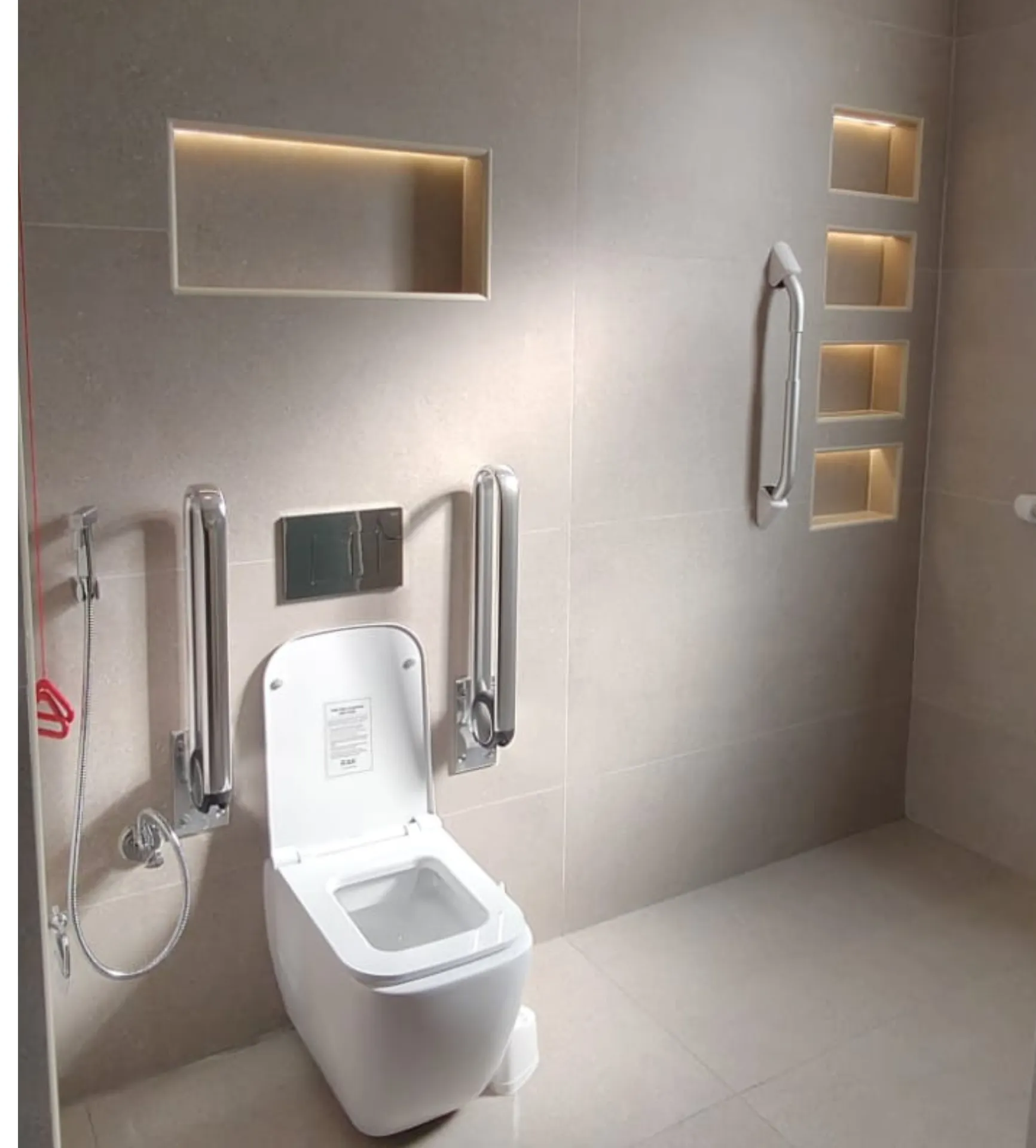
Assessment
Free in-person or drawing-based review of the space against Dubai UDC and Abu Dhabi IBC requirements.
Plan
Written specification with exact code references, fixture list and layout.
Approval
You review and sign off the written quote before any work begins. No obligation before this point.
Build
Sequenced installation of grab bars, fixtures, flooring, alarm system and signage.
Handover
Wheelchair-tested walkthrough confirming every clearance and fixture works in practice, not just on the drawing.
Minimum Dimensions for a Wheelchair Accessible Bathroom Under UAE Code
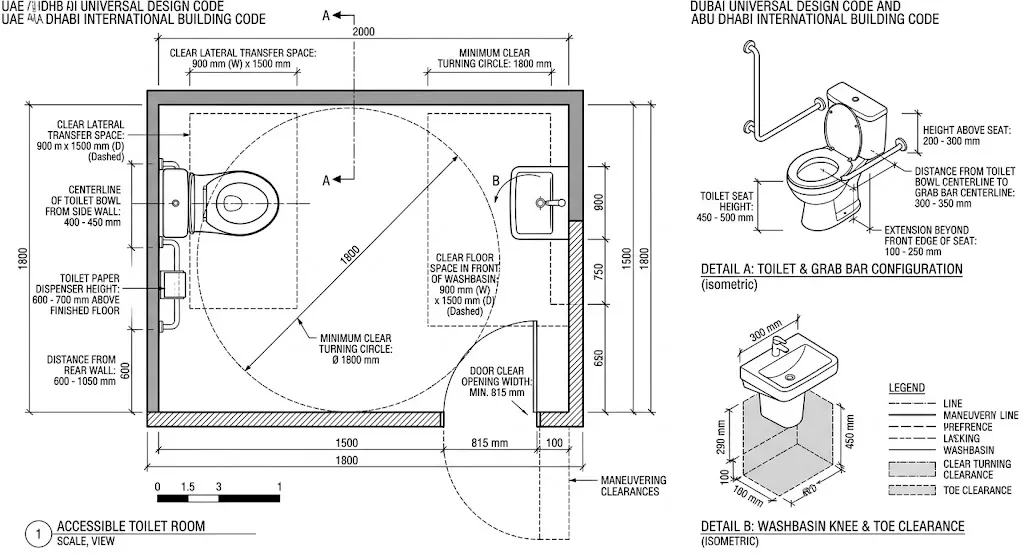
This is where most projects fall short of handicapped toilet standards. A room gets labelled "accessible toilet" on the plan, but the dimensions come from general knowledge rather than the actual UAE standards. The table below is what we build to on every project.
| Element | UAE / Abu Dhabi Standard | Code Reference |
|---|---|---|
| Turning circle diameter | 152.5 cm minimum | AADC / ICC A117.1 (modified) |
| Door clear opening width | 81.5 cm min (90 cm recommended) | AADC SSCP Annexes, Section 7.1 |
| Door swing direction | Outward or sliding only | Dubai Universal Design Code, 5.19.1 |
| Door handle bar height | 900 to 1,000 mm from floor | Dubai Universal Design Code, 5.19.1 |
| Toilet seat height | 43 to 48 cm | ICC A117.1 (modified for Abu Dhabi) |
| Toilet centreline to side wall | 40 to 46 cm | Abu Dhabi International Building Code |
| Grab bar height (horizontal) | 840 to 915 mm | Abu Dhabi IBC, Sec. 609 / Dubai UDC 5.19.2 |
| Toilet pan clearance depth | 142 cm from rear wall | ICC A117.1 (modified) |
| Toilet pan clearance width | 152 cm from side wall | ICC A117.1 (modified) |
What is the minimum size for a wheelchair accessible bathroom? Once you account for the washbasin, door clearance and fixtures around the required turning circle and toilet pan clearances, a genuinely functional room is typically a minimum of 1.7 m by 2.3 m, and going slightly larger makes a real difference to usability.
What is the smallest wheelchair accessible shower? A transfer shower needs a minimum internal width of 91 cm. A turning shower, that lets a wheelchair user turn inside or receive carer assistance, needs a minimum of 152 cm, per the ICC A117.1 standard underpinning the Abu Dhabi code.
The Full Compliance Checklist
This is the review framework we use to assess every accessible toilet, whether we built it or we are auditing someone else's installation. Meeting the dimensions is necessary but not sufficient, every item below is required for full compliance.
- Turning circle clear at all times. 152.5 cm diameter, no fixtures, bins or equipment encroaching.
- Door swings outward or slides. An inward-swinging door is a code violation and blocks rescue access if someone collapses inside.
- Door handle bar at correct height. 300 mm horizontal bar at 900 to 1,000 mm from the floor, positioned per Dubai UDC 5.19.1.
- Grab bars on side and rear wall. At correct heights and lengths, detailed in the section below.
- Swing-up grab bar where required. Specified for residential Type B units, recommended where fixed bilateral bars would restrict wheelchair transfer.
- Disabled toilet alarm with floor-level pull cord. Mandatory, cord must reach near floor level.
- International Symbol of Accessibility on the door. Required signage, mounted at accessible height.
- Lever-operated or sensor taps only. Operable with one hand, no tight gripping or wrist twisting.
- Toilet seat at 43 to 48 cm. Load-rated to 150 kg minimum, not sprung to return to a raised position.
- 30% minimum luminance contrast. Between the toilet seat and surrounding wall or floor surfaces.
- Toilet paper dispenser positioned correctly. 48 to 122 cm from the floor, 18 to 23 cm in front of the toilet, not behind the grab bar.
- Fold-down changing table. Mandatory under Dubai UDC 5.19, frequently omitted and an automatic compliance failure.
- Non-slip floor surface. Rated for wet conditions, with contrast against walls for visually impaired users.
- Basin knee clearance. Minimum 69 cm clear height for frontal wheelchair approach.
Grab Bar Specifications: The Detail Most Projects Get Wrong
Grab bar height is the single most common compliance error we find in accessible toilets across the UAE. The bars are present and fixed to the wall, but installed at a height convenient for the contractor rather than the height the code specifies. A difference of even 50 to 80 mm can make the bar unreachable or unsafe during a transfer.
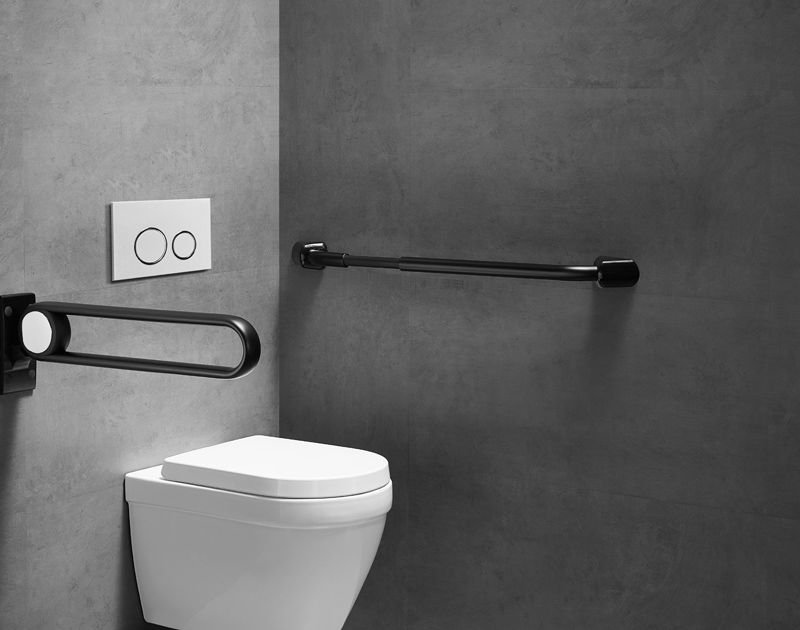
| Bar | Specification |
|---|---|
| Horizontal grab bars | 840 to 915 mm above finished floor, measured to top of gripping surface |
| Side wall grab bar | Minimum 106 cm long, no more than 30 cm from rear wall, extending at least 137 cm from it |
| Rear wall grab bar | Minimum 91 cm, extending at least 30 cm from one side of the toilet centreline and 61 cm from the other |
| Structural strength | Withstands 250 lbs (approx. 113 kg) of force at any point on the bar or fixings |
| Bar diameter | 32 to 38 mm, spaced exactly 38 mm from the wall to prevent hand entrapment, rounded edges throughout |
Field note: install wall blocking during initial construction
The most expensive grab bar installation is a retrofit. If structural blocking is not installed inside the wall cavity between 46 cm and 122 cm from the floor during construction, adding grab bars later means opening the wall or using surface-mounted anchors that rarely meet the required load rating. If you are still in the design phase, specify blocking now, it costs almost nothing at this stage.
When to use a swing-up grab bar
A swing-up grab bar folds flat against the wall when not in use, letting a wheelchair user approach the toilet from the side without obstruction, then lowers to provide transfer support. The Abu Dhabi International Building Code specifies these for water closets in residential Type B units. We also recommend them in any accessible toilet where room dimensions make fixed bilateral bars impractical, particularly in retrofits with limited footprint.
Disabled Toilet Alarm Systems
A disabled toilet alarm system is a visual and audio pull-cord alarm that lets a person who has fallen or needs assistance alert staff, even from floor level. That last part is critical, and is why the pull cord must reach to near the floor. A person who has fallen may not be able to stand, reach a wall-mounted button, or call out loudly enough to be heard. The cord running down to within a few centimetres of the floor lets them activate the alarm from wherever they are in the room, while the panel outside gives staff both an audible signal and a visual indicator of which facility needs attention.
This is mandatory, not optional. Per the AADC SSCP Annexes, Section 7.1, all accessible toilets in public spaces must include an audio and visual alarm system, applying to commercial, healthcare, hospitality, education and public-sector facilities.
Without one, the building owner carries direct liability if an incident occurs. We have reviewed facilities where the alarm was installed during fit-out but the pull cord was later tied up by cleaning staff who found it inconvenient. The system was physically present but non-functional, which is not compliance, it is a documented liability.
Smart integration option
Modern alarm systems can link to a building management system rather than a standalone panel. When integrated with a smart facilities platform, the alarm notifies duty staff on their devices, logs the alert with a timestamp, and can be monitored remotely, particularly relevant for larger developments and healthcare facilities where response time matters. See our smart home solutions for how we approach this integration.
Handicap Toilet Accessories List: Everything a Compliant Accessible Bathroom Needs
This is the complete handicap toilet accessories list, covering everything we specify and fit on an accessible bathroom project. Every item on this handicapped toilet accessories list is either mandatory under UAE code or a code-referenced requirement for specific facility types.
| # | Accessory | Purpose |
|---|---|---|
| 1 | Fixed side grab bar | Transfer support, 840 to 915 mm height, minimum 106 cm long |
| 2 | Fixed rear grab bar | Stability when seated and rising, minimum 91 cm |
| 3 | Swing-up grab bar | Folds flat, used where fixed bilateral bars restrict wheelchair approach |
| 4 | Disabled toilet alarm system | Visual and audio pull-cord alarm, mandatory in public-use facilities |
| 5 | Raised toilet seat | Where base toilet is below 43 cm, load-rated to 150 kg minimum |
| 6 | Lever or sensor taps | Operable with one hand, no tight grip or wrist twisting |
| 7 | Toilet paper dispenser | Positioned below the grab bar, 48 to 122 cm from the floor |
| 8 | Accessible toilet sign | International Symbol of Accessibility, mandatory under Dubai UDC |
| 9 | Fold-down changing table | Mandatory in all accessible toilet rooms under Dubai UDC 5.19 |
| 10 | Accessible washbasin | Minimum 69 cm knee clearance, lever or sensor tap |
| 11 | Adjustable or angled mirror | Positioned for seated wheelchair height |
| 12 | Non-slip floor treatment | Wet-rated, contrast with walls for visually impaired users |
| 13 | Sanitary disposal bin | Within reach from the toilet seat, foot or lever operated lid |
| 14 | Nurse call / emergency Alarm | Required in healthcare facilities, separate from the standard alarm |
Items 4 and 9, the alarm system and the fold-down changing table, are the two most frequently missing in the projects we review. Both are mandatory under the Dubai Universal Design Code, and their absence is not a minor oversight, it will be flagged in any formal accessibility audit.
From Code Compliance to Genuine Accessibility
Meeting every specification in the code is necessary. It is not sufficient to guarantee the toilet works for the person using it. In projects we have reviewed across the UAE, we have seen all of the following in facilities that passed visual inspection.
- Outward-swinging doors installed correctly, but with insufficient corridor clearance outside for a wheelchair user to pull the door open.
- Grab bars installed at the correct height but fixed into wall finishes without structural backing, failing under load.
- A fold-down changing table specified and installed, but positioned so it cannot be deployed without moving a wheelchair out of the room first.
- Alarm pull cords tied up or shortened by cleaning staff, rendering the system non-functional.
- A 152 cm turning circle shown on plan but encroached upon by a pedal bin or cleaning equipment stored inside the toilet.
These failures do not show up in a drawing review. They show up when you put a wheelchair in the room. Our recommendation for any project where the accessible toilet is a meaningful part of the building's compliance obligation: test it from a wheelchair during fit-out, before sign-off. What passes inspection on a drawing does not always function for the person using it, and catching this while the room is still being finished costs very little to correct.
Every Bathroom Is Different, So Every Quote Is Assessed First
Two bathrooms that look similar on paper can need entirely different work once you account for existing plumbing, door position, wall structure and the number of fixtures required. We do not publish a flat price list because it would not be honest about what your project actually needs. Every quote follows the same three principles.
Assessed First
We review the space, in person or from drawings, before we price anything.
In Writing
You receive an itemised written quote with code references, not a verbal estimate.
No Obligation
The assessment and quote are free. You decide whether to proceed.
Assessments are usually scheduled within 2 to 3 business days across the UAE.

"I didn't start Flex Access to sell equipment. I started it because I kept meeting people who had everything they needed to be independent, except a bathroom that worked for them."
Nouh Aqra
Founder and Managing Director, Flex Access
See How This Looks in an Actual UAE Villa
Upgraded Villa Bathroom for Accessibility and Independent Living
A full bathroom renovation in an Abu Dhabi villa, built to correct turning circle, grab bar and roll-in shower specifications, enabling safer, independent daily living without losing the character of the home.
Read the case study →Frequently Asked Questions
What is a handicap toilet or accessible toilet?
A handicap toilet, also called an accessible toilet or accessible sanitary facility, is a bathroom built so a wheelchair user or person with limited mobility can enter, turn, transfer onto the toilet and exit independently and safely, to the dimensions and fixtures set out in the Dubai Universal Design Code and Abu Dhabi International Building Code.
What is the difference between an accessible toilet and a disabled toilet?
None, they are the same facility. Disabled toilet is the common search term and appears in legacy documents. Accessible toilet or accessible sanitary facility is the preferred code and institutional language used in the UAE today.
What does PWD toilet mean?
PWD toilet means a toilet for a Person With a Disability, the same facility referred to elsewhere as a handicap toilet or accessible toilet. In the UAE, the official legal term is People of Determination, defined under Federal Law No. 29 of 2006.
What does HC toilet mean?
HC toilet is a shorthand for handicapped toilet, commonly used on floor plans, signage and facilities management schedules in the UAE, referring to the same accessible toilet defined under UAE building codes.
Can a normal person use an accessible washroom?
Yes. Accessible toilets are not legally restricted to people with disabilities. Carers, parents with young children and anyone who benefits from the extra space can use them, though the facility should stay prioritised for those with accessibility needs.
What is the minimum size for a wheelchair accessible bathroom?
The room needs a turning circle of at least 152.5 cm kept fully clear, with the toilet pan requiring 152 cm of clear width and 142 cm of clear depth. Once you allow for the washbasin, door clearance and fixtures, a genuinely functional accessible toilet room is typically a minimum of 1.7 m by 2.3 m.
What height should a handicap toilet be?
The toilet seat should sit between 43 and 48 cm from the finished floor to the top of the seat, per the ICC A117.1 standard that underpins both the Abu Dhabi International Building Code and the Dubai Universal Design Code.
What is a pod toilet and does Flex Access supply them?
A pod toilet is a prefabricated, modular accessible washroom unit, used where there is no existing room to convert, such as construction sites, event grounds or fast-turnaround retrofits. Flex Access can specify and supply modular accessible toilet pods built to the same UAE code requirements as a fixed installation.
Why do we need swing-up grab bars for disabled toilets?
A swing-up grab bar folds flat against the wall when not needed, so a wheelchair user can approach the toilet from the side without the bar blocking the transfer space, then lowers to provide full support. The Abu Dhabi International Building Code specifies them for residential Type B water closets, and they are the practical choice in retrofits with limited room width.
How far should an accessible toilet be from any point in a public building?
The Dubai Universal Design Code sets a maximum travel distance of 150 metres between an accessible toilet and any point in a public building, which in practice means multi-floor or large-footprint buildings need accessible toilets on every level and in more than one location.
Nouh Aqra
Accessibility Consultant, Founder & Managing Director, Flex Access
Over 10 years reviewing accessibility and mobility projects across the UAE, with direct technical knowledge of the Dubai Universal Design Code, Abu Dhabi International Building Code and AADC SSCP Annexes. Every Flex Access project is reviewed personally against these standards before handover.
More about Nouh Aqra →Other Accessibility Services From Flex Access
Accessible bathrooms are one part of a wider set of accessibility solutions Flex Access provides across the UAE.
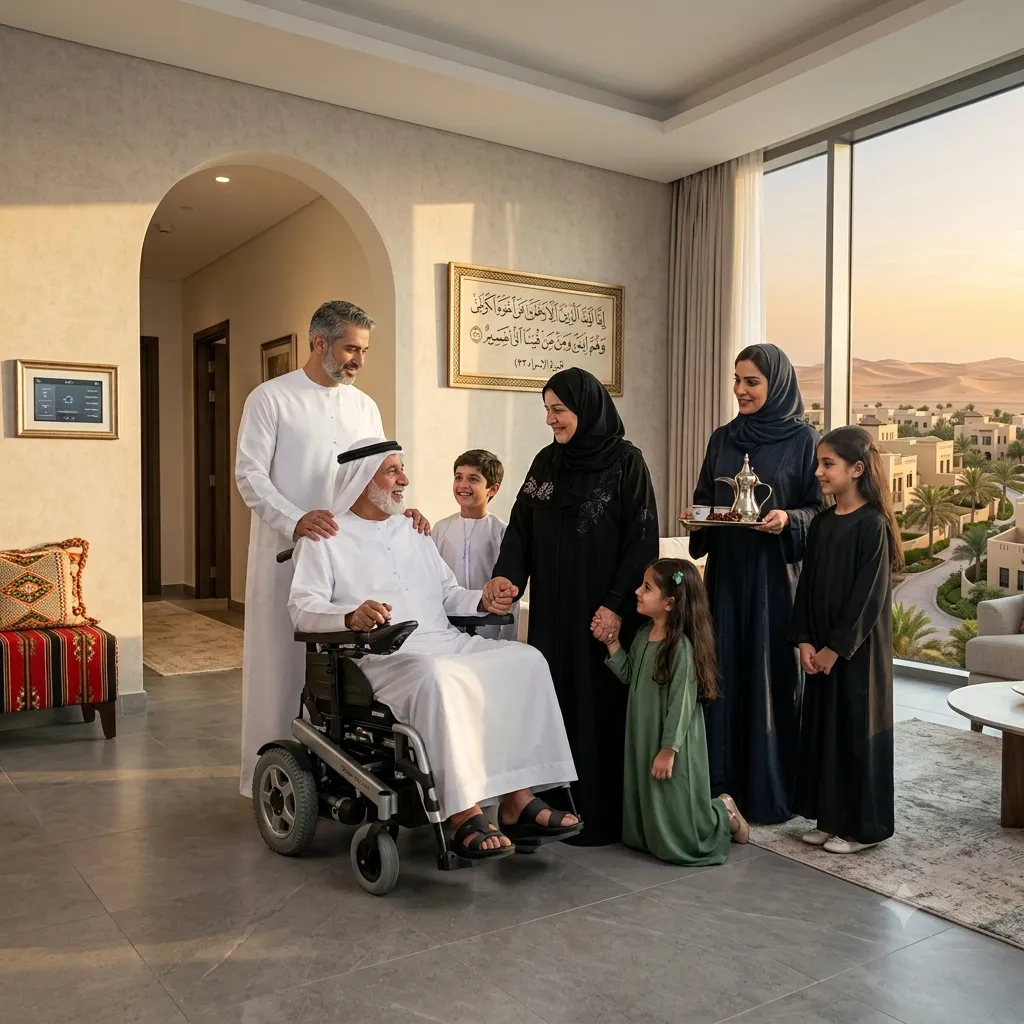
Aging in Place Renovation
Whole-home renovation so aging parents can stay in their home safely.
Learn more →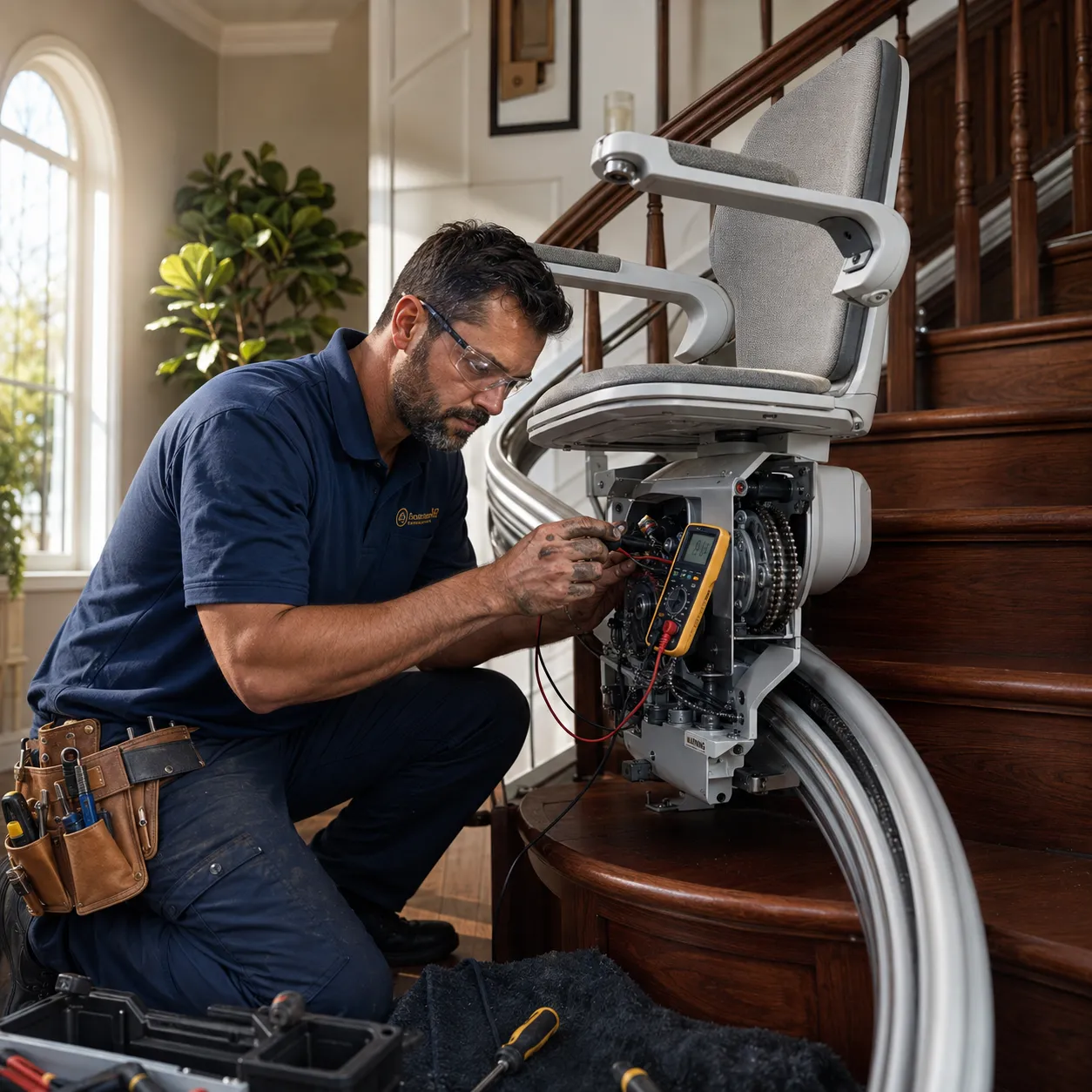
Maintenance and Repair
Scheduled servicing and priority repairs for grab bars, lifts and accessibility fixtures.
Learn more →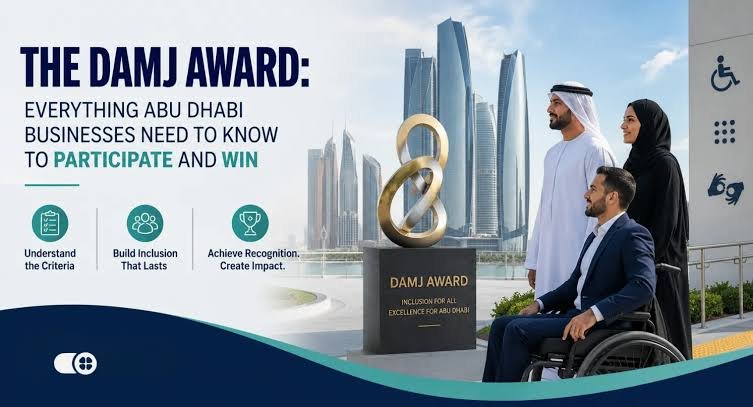
DAMJ Award Consulting
Guidance for Abu Dhabi organisations applying to the Excellence Award for People of Determination.
Learn more →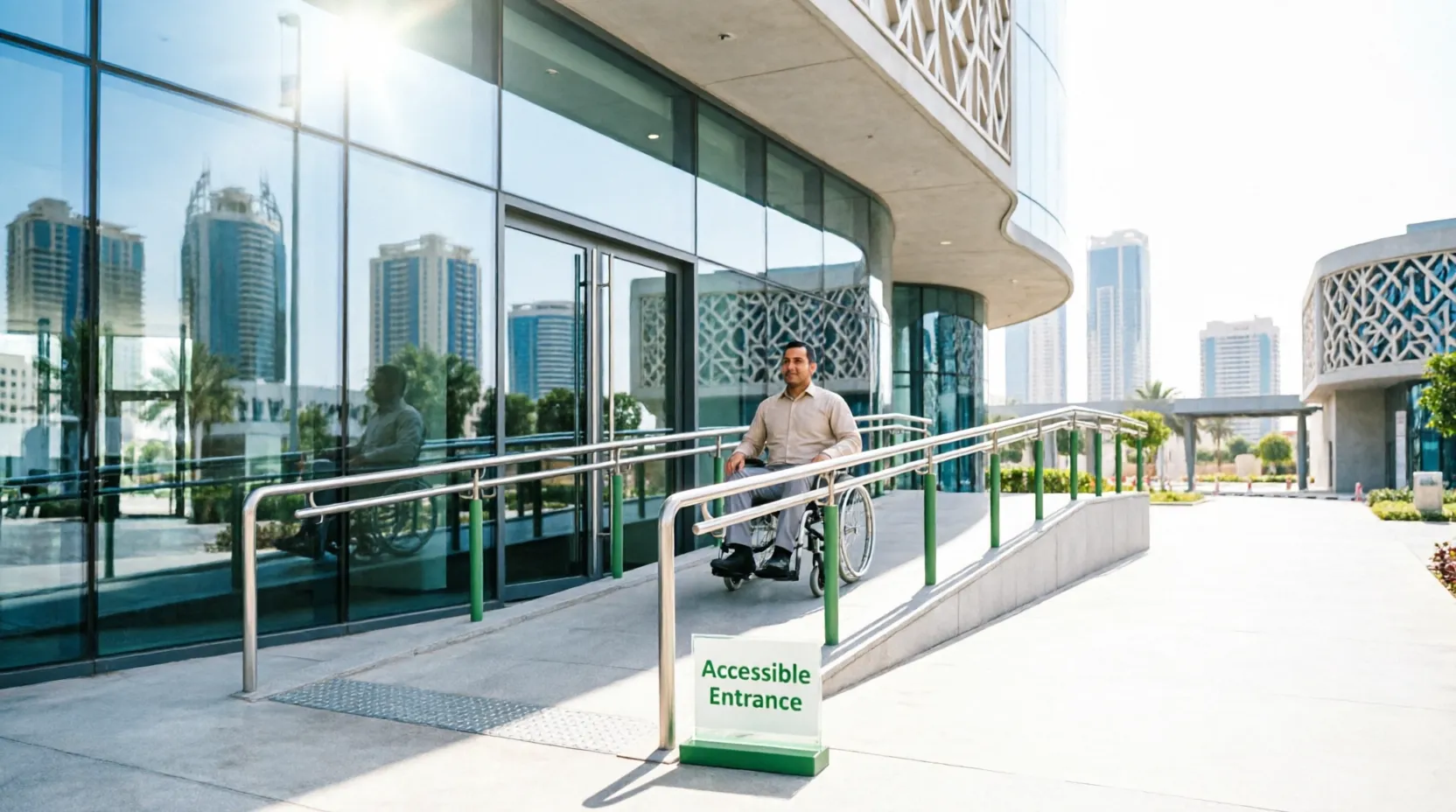
Wheelchair Accessible Home Modifications
Layouts designed for independent wheelchair use with proper turning circles and hardware.
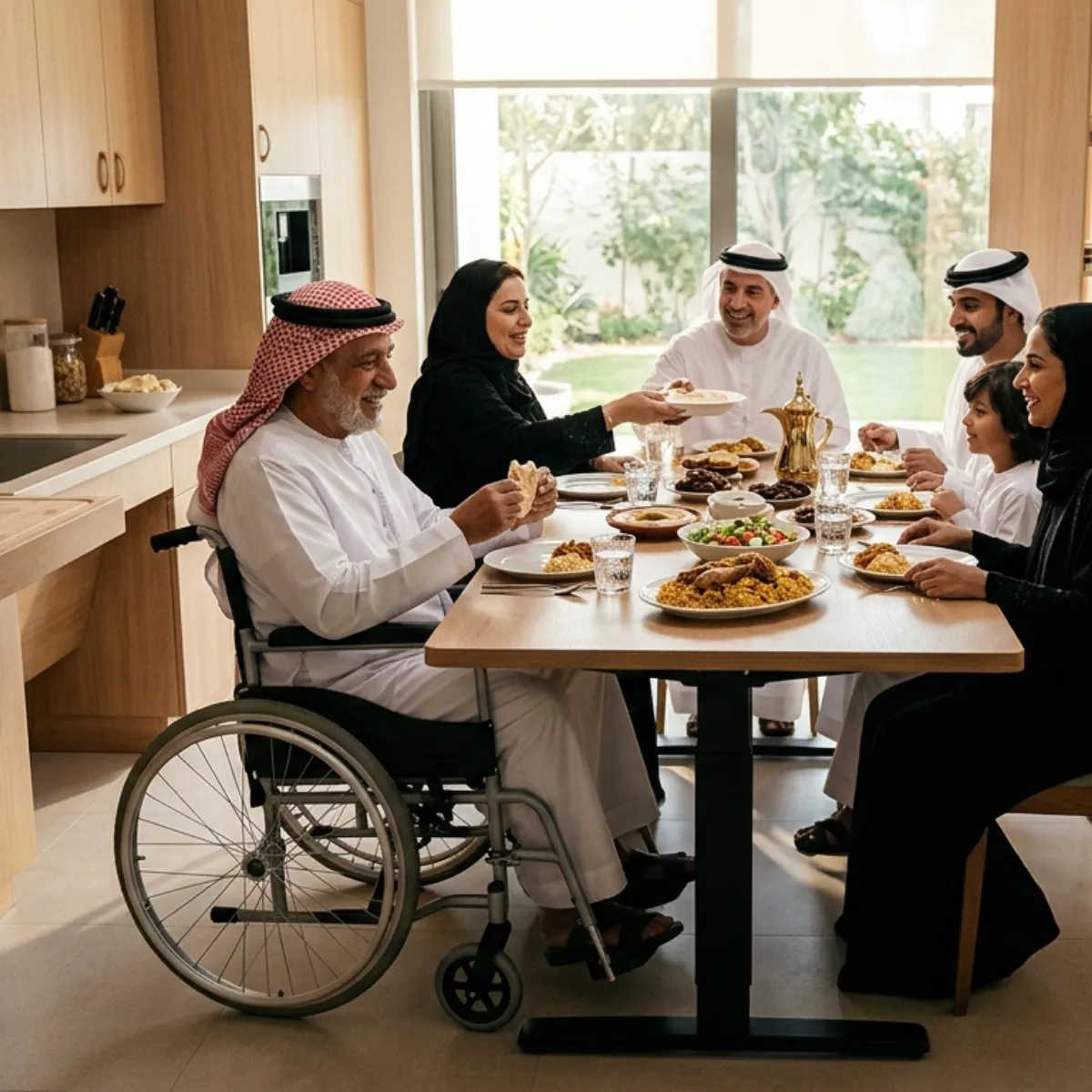
Accessible Kitchen
Reachable counters and appliances for independent cooking.
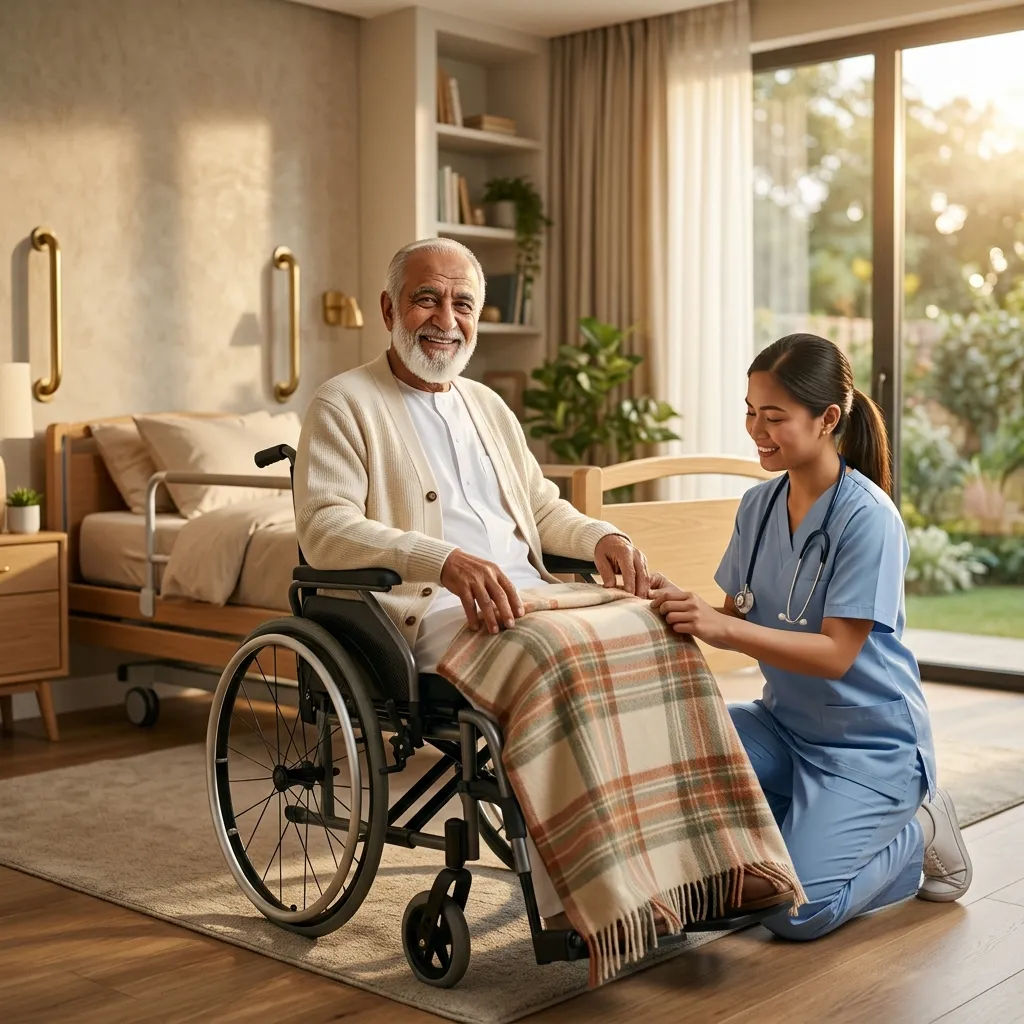
Homecare-Friendly Home Modifications
Layouts accommodating both resident and caregiver movement.
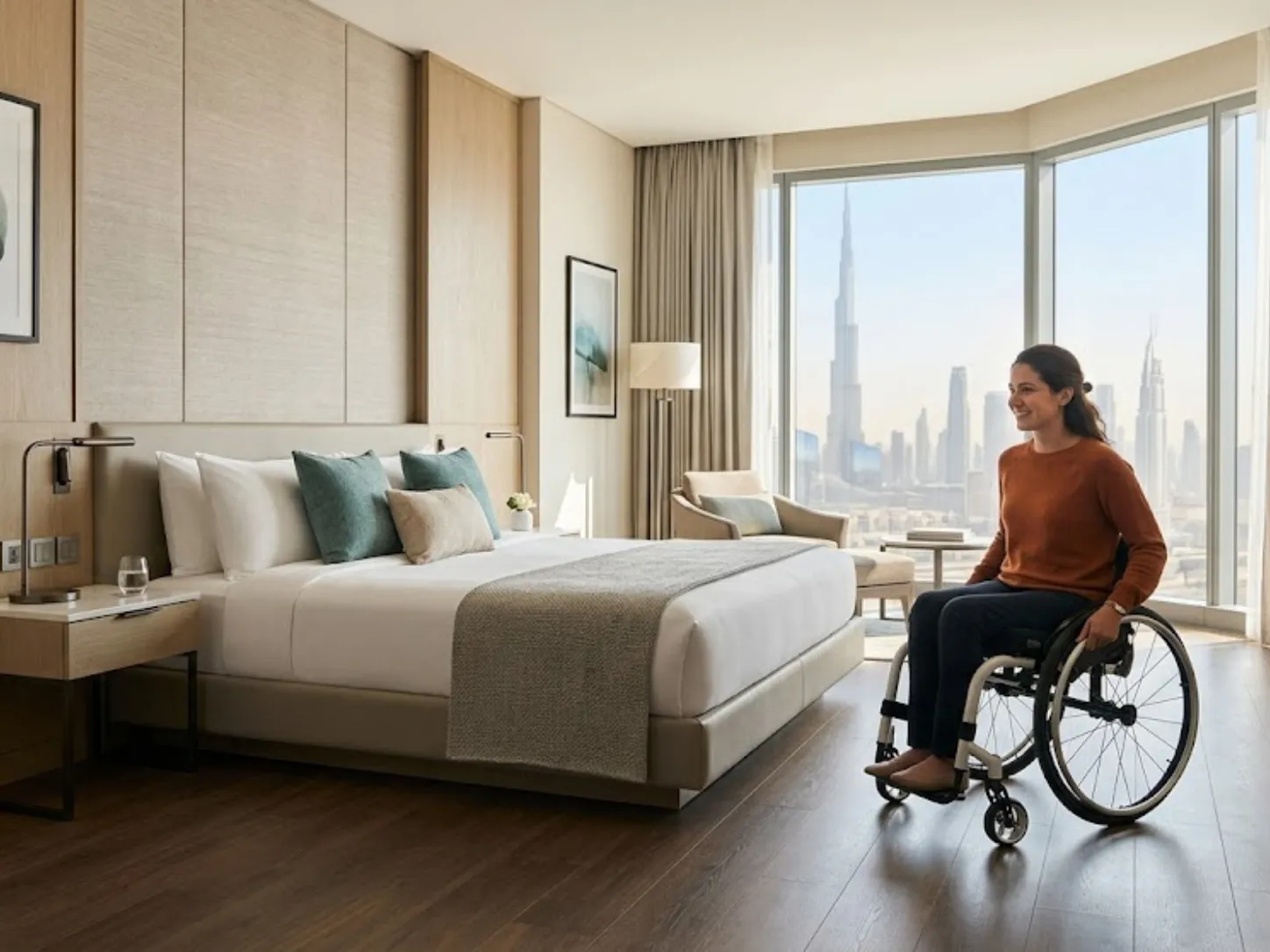
Hospitality Accessibility Consulting
Helping hotel operators meet UAE accessible room requirements.
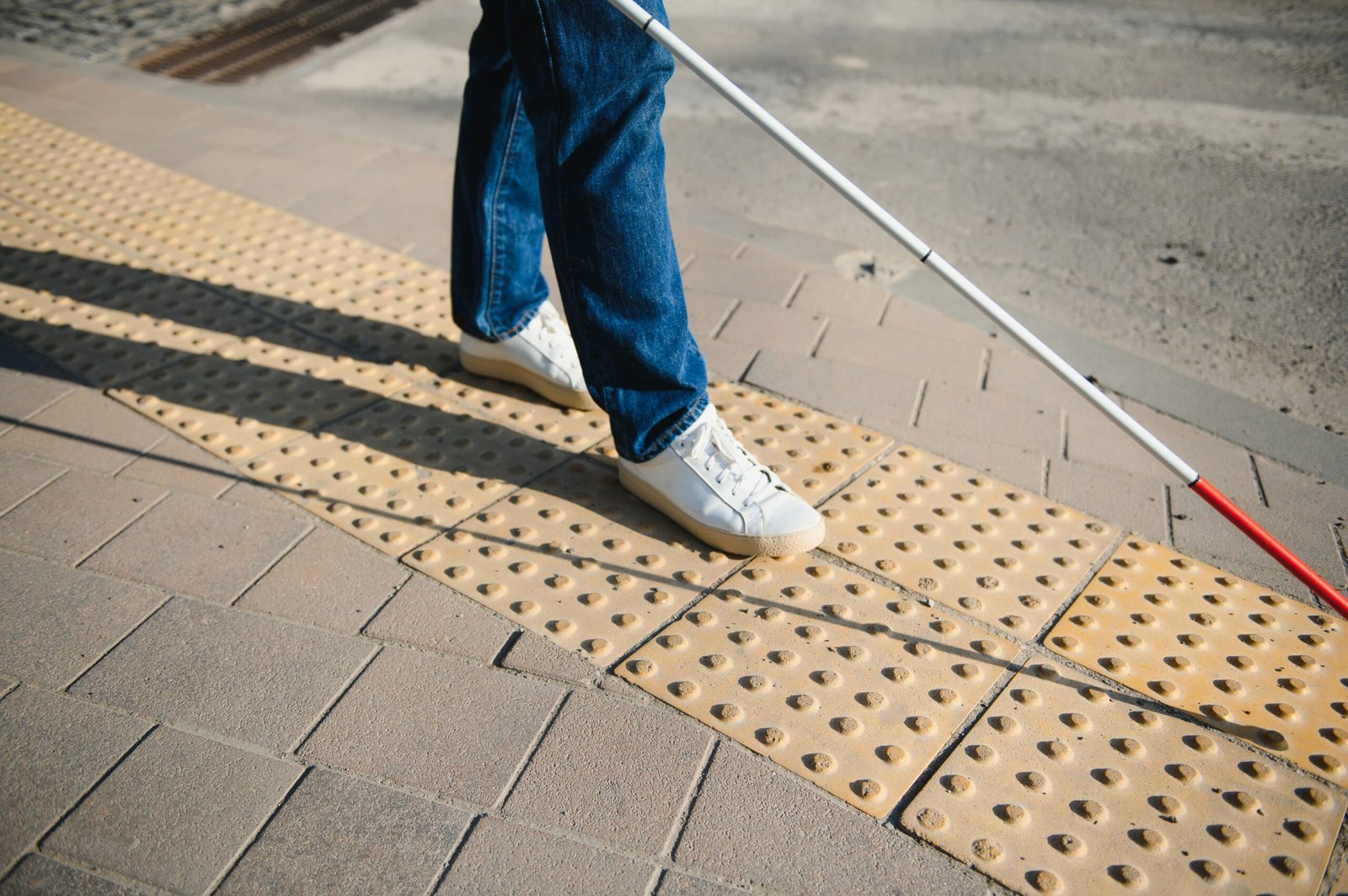
Tactile & Wayfinding Systems
Tactile paving, guidance strips and wayfinding signage for visually impaired users.
Ready for a Bathroom That Actually Works
Book a free assessment and get a written, code-referenced quote for your accessible bathroom, no obligation.