
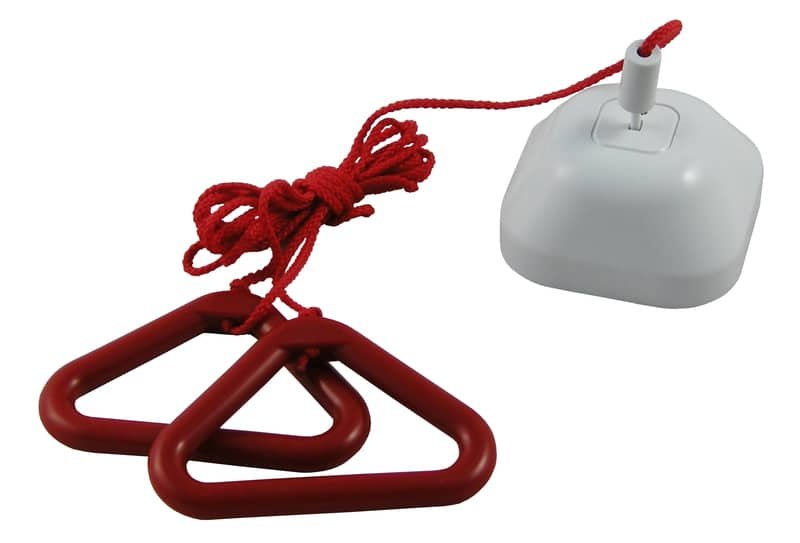
Disabled Toilet Alarm System
When someone falls or feels unwell in an accessible toilet, the first problem is that nobody outside knows. A disabled toilet alarm system fixes that: one pull of the cord sets off a light and sounder where staff or family will notice it, and the alarm stays on until someone comes in and resets it.
Flex Access supplies and installs complete 1 to 4 zone disabled toilet alarm systems for homes, clinics, hotels, offices and public buildings across the UAE, from the site survey through to a tested, working system.
Can be used at
House
Business
Your are here


Features
- Simple 3 wire operation for all field devices
- Control Panel supporting up to 4 zones
- Simple maintenance and fault diagnosis
- On board buzzer in both Control Panel & Remote Indicator
- Zone LED indication on Control Panel
- Full range of field devices available (i.e. Pull Cord, Remote Reset & Remote Indicator)
Introduction
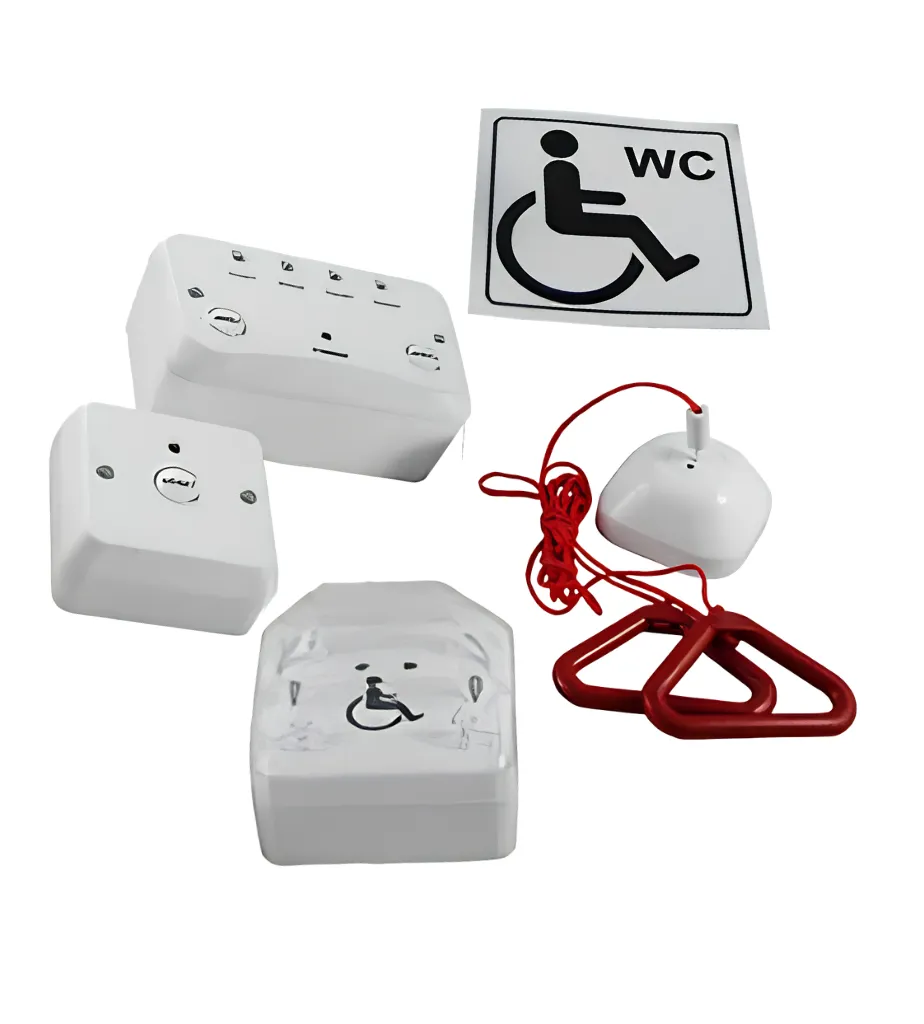
- Pull Cords (DPTA-PC) are “Call Devices” which are ceiling
mounted pull cords used to generate an alarm activation
by a person in distress or requiring attention from a
carer. When a call devices is activated the system will
generate an alarm and the Remote Indicator (DPTA-RI)
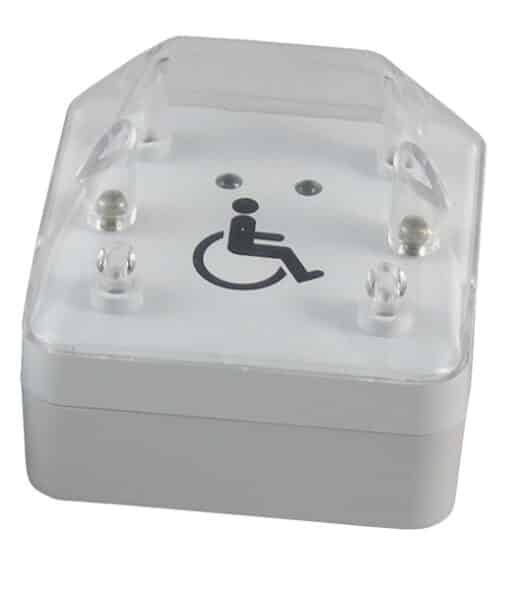
will illuminate & sound. - Remote Resets (DPTA-RR) are “Reset Devices” which are
generally wall mounted and consist of a push button
which is pressed to cancel an alarm activation. - Remote Indicators (DPTA-RI) are “Warning Devices”
that are generally wall mounted devices which during
an alarm activation will alert cares / staff of a person
requiring attention. Warning devices typically have
visual and audible element within the same housing,
but devices with only audible or visual elements may be
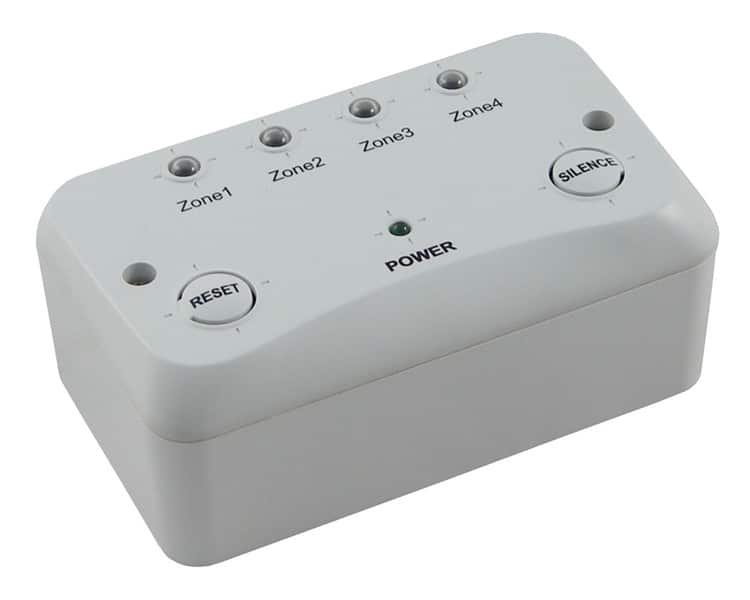
fitted to a system. - The control panel (DPTA-CP) is powered by mains supply
and an optional battery back-up can be installed which
allows the system to function during a power outage.
Electrical Requirements
- A. Power Supply
- 230V AC at 50/60Hz
- 12V DC Storage battery
- Standby Current : 4mA
- Alarm Current : 250mA (max)
How the toilet alarm system works
Help arrives because the alarm cannot be missed or switched off by accident. Each toilet is one zone, and each zone runs through the same four steps.
Call
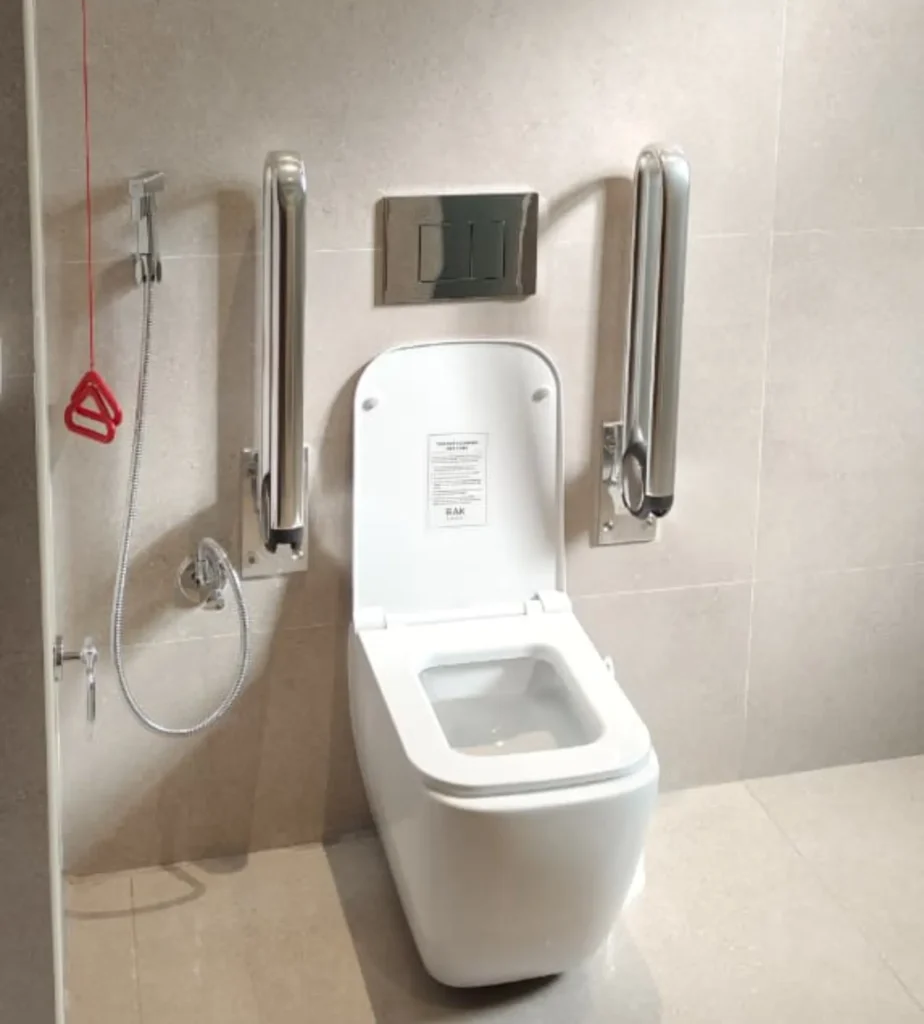
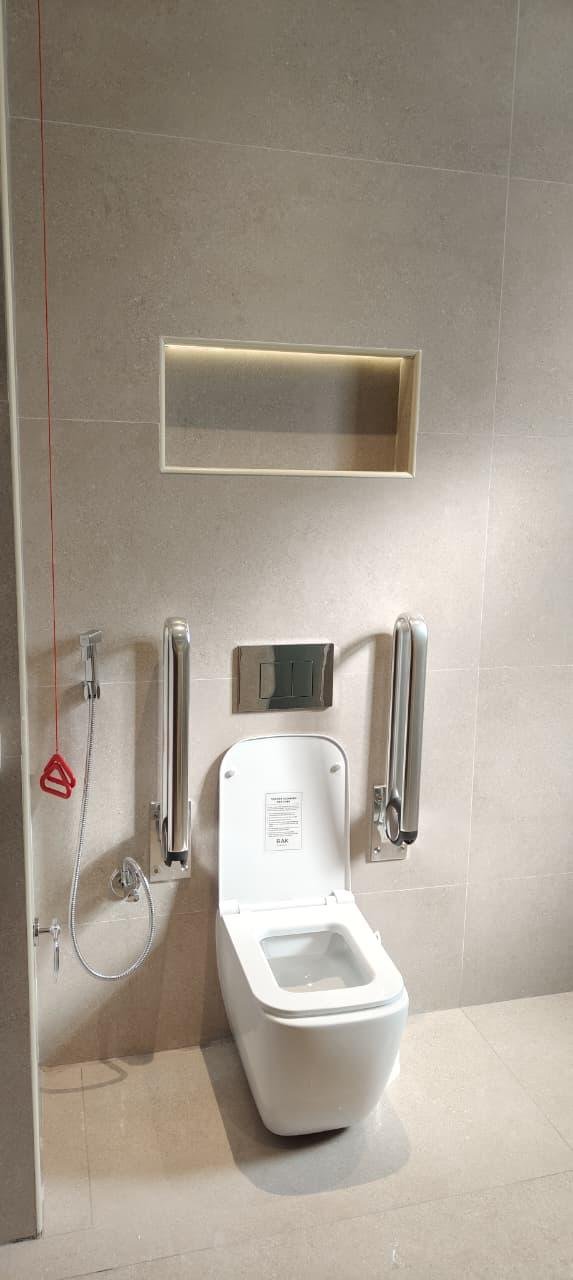
The person pulls the ceiling-mounted cord. It reaches down to the floor, so it works from the WC, a wheelchair or after a fall.
Alert
The remote indicator outside the toilet flashes and sounds, and the control panel shows which zone is calling.
Response
Staff or a family member go to that toilet. The alarm keeps sounding until they arrive.
Reset
The responder presses the reset button inside the toilet, so the alarm only clears once someone has checked on the person.
What is in the disabled toilet alarm kit
Every component has one job, and all of them run on simple 3-wire cabling.
| Component | Code | What it does | Where it goes |
|---|---|---|---|
| Pull cord | DPTA-PC | Raises the alarm | Ceiling, inside the toilet, cord reaching the floor |
| Remote reset | DPTA-RR | Cancels the alarm once help arrives | Wall, inside the toilet, within reach of the WC |
| Remote indicator | DPTA-RI | Flashes and sounds to alert staff | Wall, outside the toilet or where staff are |
| Control panel | DPTA-CP4 | Powers the system and shows the calling zone on its LEDs | Staff area, reception or plant room |
The panel and the remote indicator both carry an on-board buzzer, and fault diagnosis is done from the panel, which keeps maintenance quick.
Choose your system: 1 to 4 zones
One zone covers one toilet, so the right kit is simply the number of accessible toilets you need to monitor from one point.
| Kit | Zones | Typical site |
|---|---|---|
DPTA-KIT1 | 1 | Villa, apartment, small clinic or shop |
DPTA-KIT2 | 2 | Office floor or restaurant with male and female accessible WCs |
DPTA-KIT3 | 3 | Small hotel or medical centre |
DPTA-KIT4 | 4 | Mall level, school or hospital wing |
Where the UAE expects an emergency alarm
If your building is inspected for accessibility, the toilet alarm is one of the items checked. The requirement depends on the building type.
Healthcare in Dubai
The Dubai Health Authority checklist for People of Determination in hospitals, day surgical centres and outpatient facilities requires accessible restrooms to have a toilet with an emergency call bell (section C.8).
Source: DHA checklist
Hotels in Dubai
The Dubai Universal Design Audit Guide lists a toilet with an alarm string in accessible hotel rooms (item ARh3), and an emergency call button or rope in full family toilets (item SPff5).
Source: Dubai Municipality guide
Layout to BS 8300
Neither UAE document sets mounting details, so designers follow BS 8300-2:2018 (section 13.7.2): a red cord with two red bangles, reachable from the WC and from the floor, kept within 50 mm of the adjacent wall where a transfer happens, and a reset button next to the WC.
Source: Installer guidance on BS 8300
This kit was designed with the BS 8300 requirements in mind. Requirements for your emirate and building type are confirmed during the site assessment.
Technical specifications
| Specification | Value |
|---|---|
| Zones | 1, 2, 3 or 4 (one per toilet) |
| Mains supply | 230V AC, 50/60Hz |
| Battery backup | Optional 12V DC, keeps the system running in a power cut |
| Standby current | 4mA |
| Alarm current | 250mA maximum |
| Wiring | 3-wire to all field devices |
| Indication | Zone LEDs on panel, light and sounder on remote indicator |
| Design basis | BS 8300 |
Disabled toilet alarm installation, start to finish
You deal with one team from survey to sign-off, so nothing falls between the supplier and the electrician.
Free site assessment
We check the toilet layout, cable routes and where staff will see the indicator.
Written quote
You receive the zone count, positions and full cost in writing within 48 hours
Installation
Cord, reset, indicator and panel fitted and wired.
Commissioning
Every zone is tested from call to reset, and your staff are shown how to respond and reset.
Aftercare
Periodic testing and repairs. Repair and maintenance →
Why choose Flex Access as your disabled toilet alarm system supplier in UAE
An alarm only matters if it is installed where it can actually be reached and heard.
Flex Access is an accessibility specialist, not a general electrical trader, so the alarm is planned together with the grab rails, door, turning space and WC position.
- Based in Abu Dhabi, installing across UAE
- Fitted alongside our accessible bathroom installations →
- Advice from accessibility consultant Nouh Aqra on what your building type requires
- Suitable for homes and businesses, including healthcare and hospitality
Disabled toilet alarm system FAQs
Who supplies disabled toilet alarm systems in the UAE?
Flex Access supplies and installs disabled toilet alarm systems, also called handicap toilet alarm systems, across the UAE. Each project starts with a free site assessment and a written quote.
Is a disabled toilet alarm required in the UAE?
For many buildings, yes. The DHA checklist for healthcare facilities requires an emergency call bell in accessible restrooms, and the Dubai Universal Design Audit Guide lists an alarm string in accessible hotel room toilets.
Where should the pull cord and reset button be installed?
Following BS 8300-2:2018, the red pull cord should be reachable from the WC and from the floor, and the reset button should sit on the wall next to the WC. The remote indicator goes outside the toilet where staff will see and hear it.
How many zones do I need?
One zone per accessible toilet. Kits come in 1, 2, 3 or 4 zones, all monitored from one control panel.
Does the alarm work during a power cut?
Yes, if the optional 12V DC battery backup is fitted. The system normally runs on 230V AC mains.
How is the alarm turned off?
Only by pressing the reset button inside the toilet. This means the alarm cannot be cleared until someone has gone in and checked on the person.
Make sure the next call for help is heard
Book a free site assessment and get a written quote for the right disabled toilet alarm system.