
Tactile Paving, Signage & Braille Installation in Abu Dhabi, Dubai and the UAE
One planned system, not three separate purchases. Flex Access handles tactile paving installation Dubai-wide and across the UAE, supplying and installing tactile paving, tactile signage and Braille signage UAE-wide, plus tactile maps, as a single accessible route, engineered and documented against the Dubai Universal Design Code.
Trusted Across the UAE




Quick Answer
Tactile paving, also called a detectable warning surface in international specifications, is a textured, colour-contrasted walking surface that pedestrians who are blind or have low vision can detect underfoot or by cane. The Dubai Universal Design Code recognises two types: warning surfaces (a truncated dome or cone pattern, laid crosswise at hazards like crossings, stairs and platform edges) and directional tactile indicators (a raised bar pattern, laid parallel to the direction of travel to guide people along a route). The code sets a minimum 50-point LRV colour contrast against the surrounding surface and a maximum 4mm texture height. Tactile paving UAE-wide, tactile signage, Braille signage and tactile maps UAE projects work together as one wayfinding system, not four separate products.
Why We Start With an Audit
A tactile system is only as good as the route it was planned against
Most tactile paving installation problems in the UAE aren't manufacturing defects, they're planning gaps. Flex Access starts every project with a site audit specifically because these four failures are the ones we find most often on projects installed without one.
Insufficient colour contrast
Tiles laid without checking LRV contrast against the surrounding floor, so the surface fails the visual detection requirement even where the texture itself is correct.
Warning and directional patterns swapped
A directional (guidance) surface used where a warning (hazard) surface belongs, or the reverse, which sends the wrong signal at exactly the point it matters most.
Incomplete routes
Paving that starts at one doorway and stops short of the next hazard, leaving a gap in the route a cane user has no way to anticipate.
Signage that doesn't match the paved route
Braille and tactile signage installed to a separate plan than the paving underfoot, so the two systems point a user in different directions.
What We Install
The full tactile range, supplied and installed to code
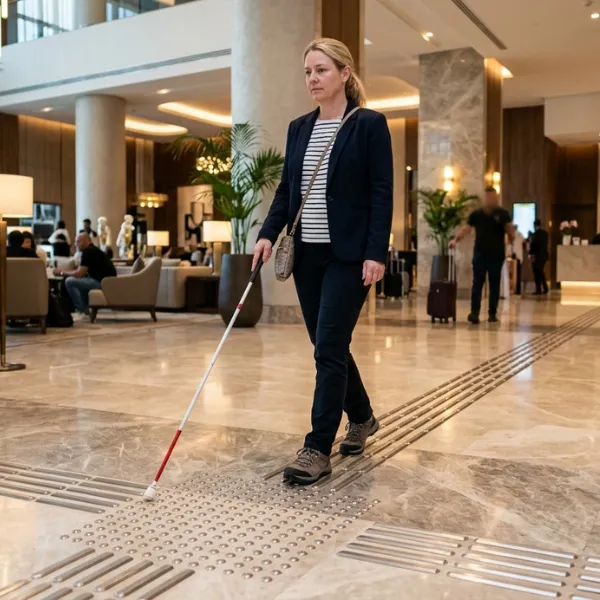
Tactile indicators installation Dubai and tactile tiles installation projects across the wider UAE both cover the same two code-defined surface types, each installed in the material that suits the environment, not a single default product for every site. This also covers tactile flooring for visually impaired users in retrofit settings where an existing floor needs an overlay rather than a full re-tile.
Warning (detectable) surfaces
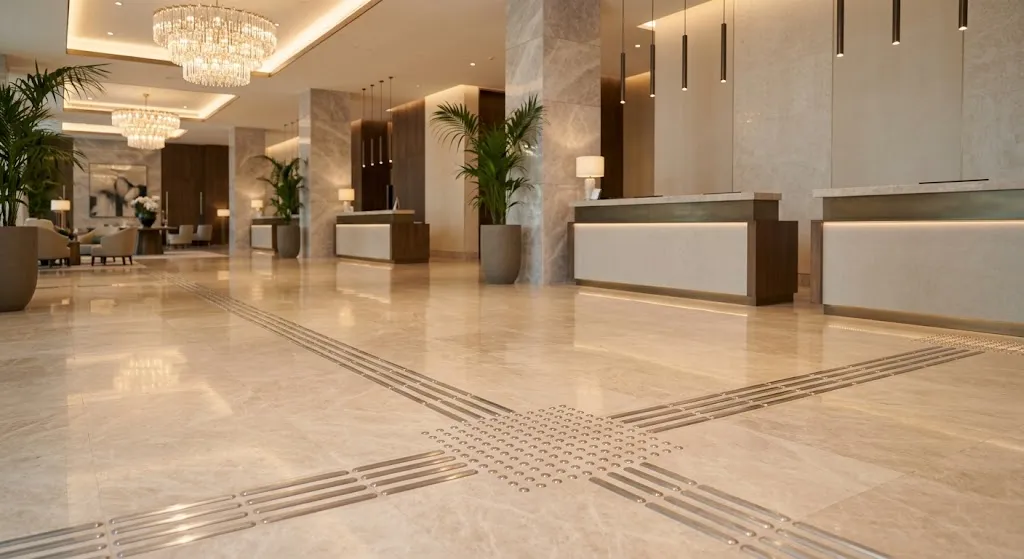
Truncated dome or cone pattern, laid crosswise to the direction of travel, extending at least 300mm from the start of a hazard, overall band width 300mm to 400mm. Used at crossings, stairs, ramps and platform edges.
Directional surfaces
Raised bar pattern, laid parallel to the direction of travel, guiding users along open paths with no natural edge, terminating at a warning surface before any hazard.
Material options, matched to the site
A stainless steel platform edge needs a different material to a hospital corridor or a villa entrance. We specify based on foot traffic, weather exposure and whether the install is new-build or retrofit.
Stainless steel and PVD-coated stainless hold up best outdoors and in high-traffic public areas. Self-adhesive overlays are the fastest route to compliance on an existing floor that can't be re-tiled. PU and ceramic suit indoor retrofit work where the contrast finish matters as much as the texture.
The Flex Access Difference
One navigable route, not four separate products
Tactile paving supply and installation in the UAE is usually sold as a flooring product. We plan it as one route: paving underfoot, tactile signage at decision points, Braille signage at doors and lifts, and tactile maps UAE-wide at building entrances, laid out together before a single tile is ordered.
Tactile maps Braille signage Directional wayfinding Warning surfaces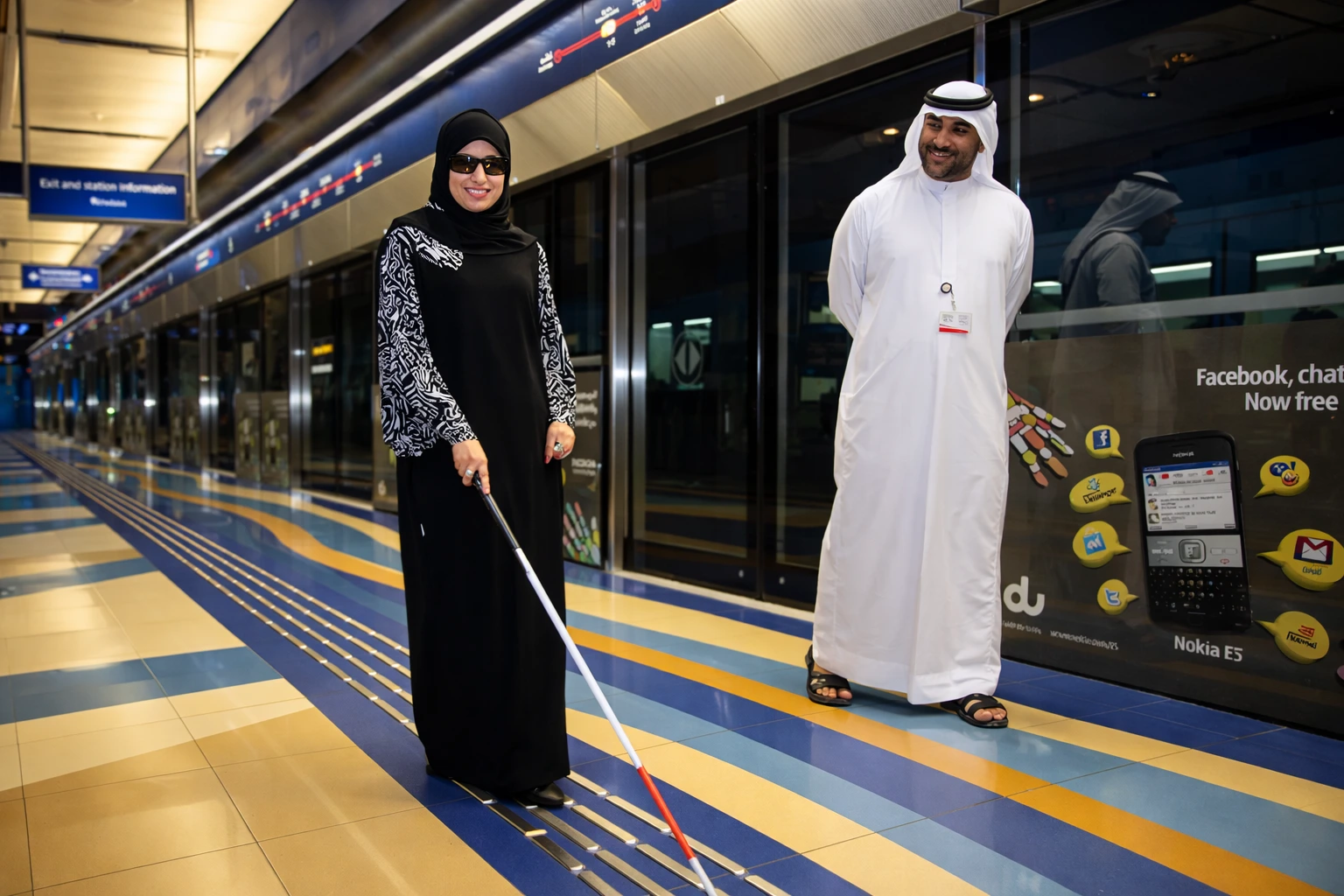
Precision Placement
We plan the route before a single tile goes down
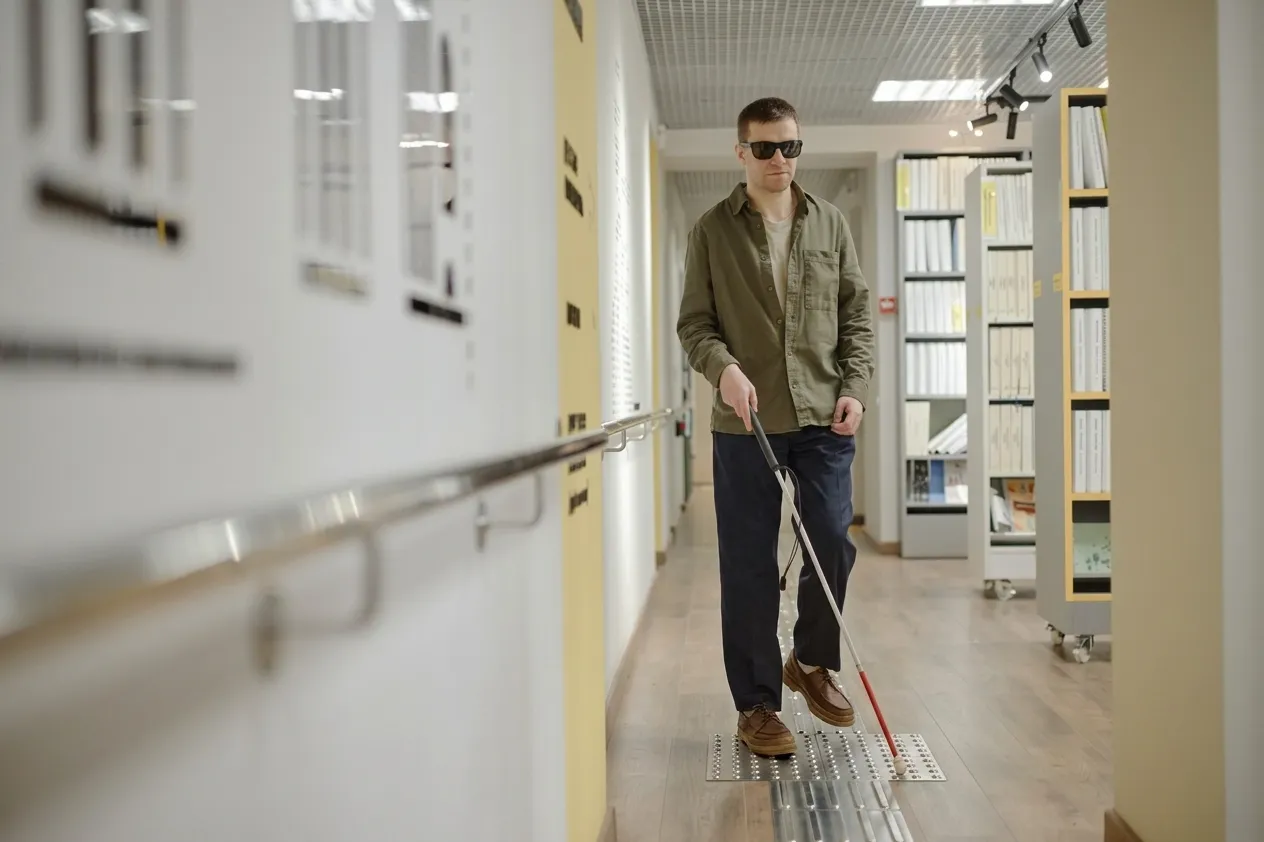
Every route is mapped and measured against the actual building, doorways, stairs, lift lobbies and hazards, before installation starts. This is the step most installers in this market skip, and it's the one that determines whether the finished paving actually works for the person using it.
How It Works
From free assessment to signed-off handover
Free site assessment
We audit the site against the failures in section 4 before anything is quoted.
Route & material planning
Precision placement mapping, as described above, plus material selection for the site.
Supply sourcing
Tiles, signage and Braille panels sourced to the specified material and code.
Installation
Installed to the planned route, not laid tile by tile on-site guesswork.
Handover & documentation
Compliance documentation delivered with the finished installation.
Where Tactile Systems Are Required
Tactile paving for metro stations, malls, hospitals and beyond across the UAE
Where tactiles are required depends on the building type, but the underlying rule is the same across all of them: any hazard, crossing, or change of direction on a public route needs a tactile solution.
Metro & public transport
Airports
Government & public buildings
Hospitals & healthcare
Hotels & hospitality
Malls & retail
Schools & universities
Residential & villa retrofits
Delivered Projects
Tactile systems installed across the UAE
Client names for these projects will be added once confirmed. Every project below has been completed and is described accurately by building type, emirate and scope.
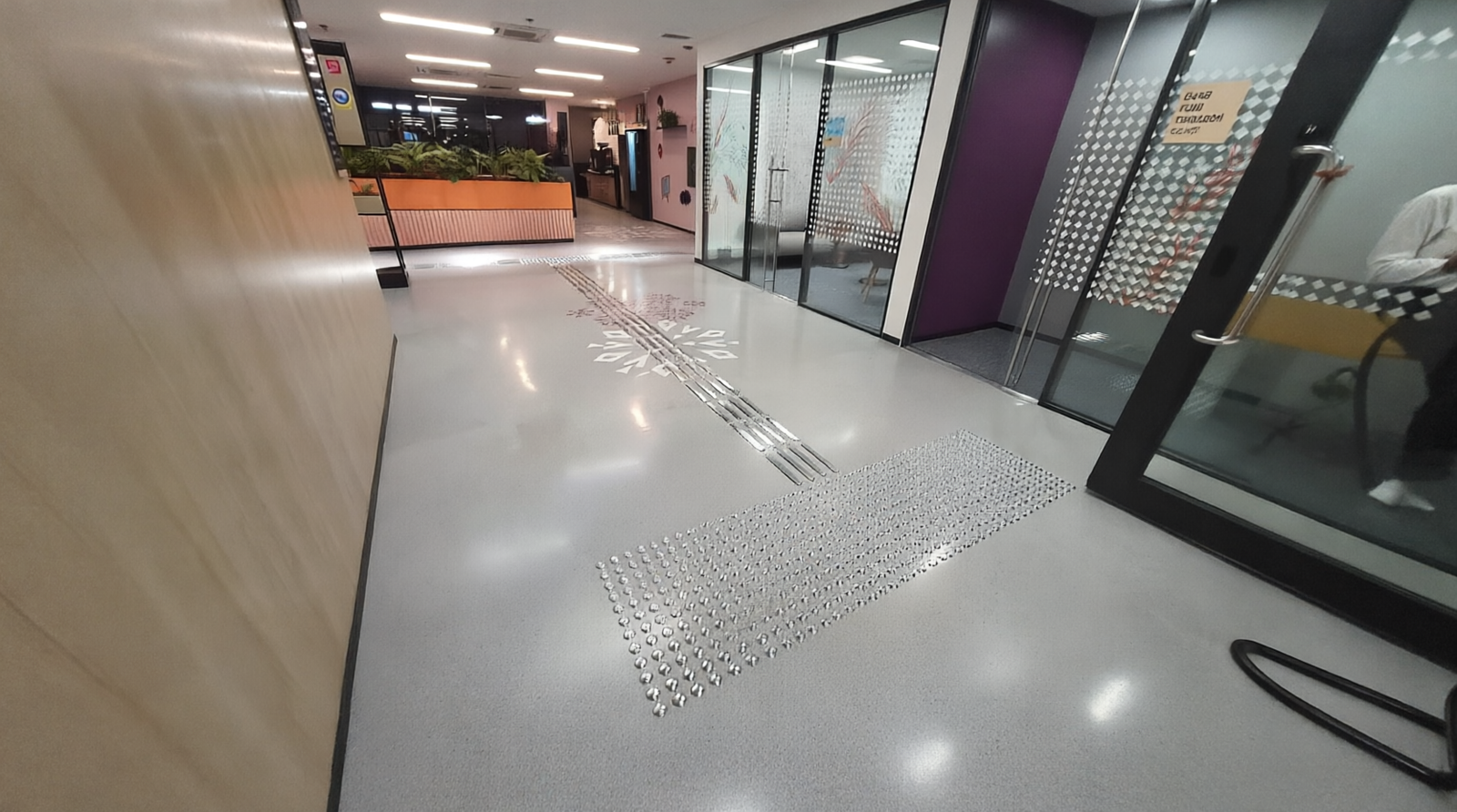
Full tactile route from entrance to reception and ward corridors, warning surfaces at every stair and lift lobby, Braille signage at all patient-facing doors.
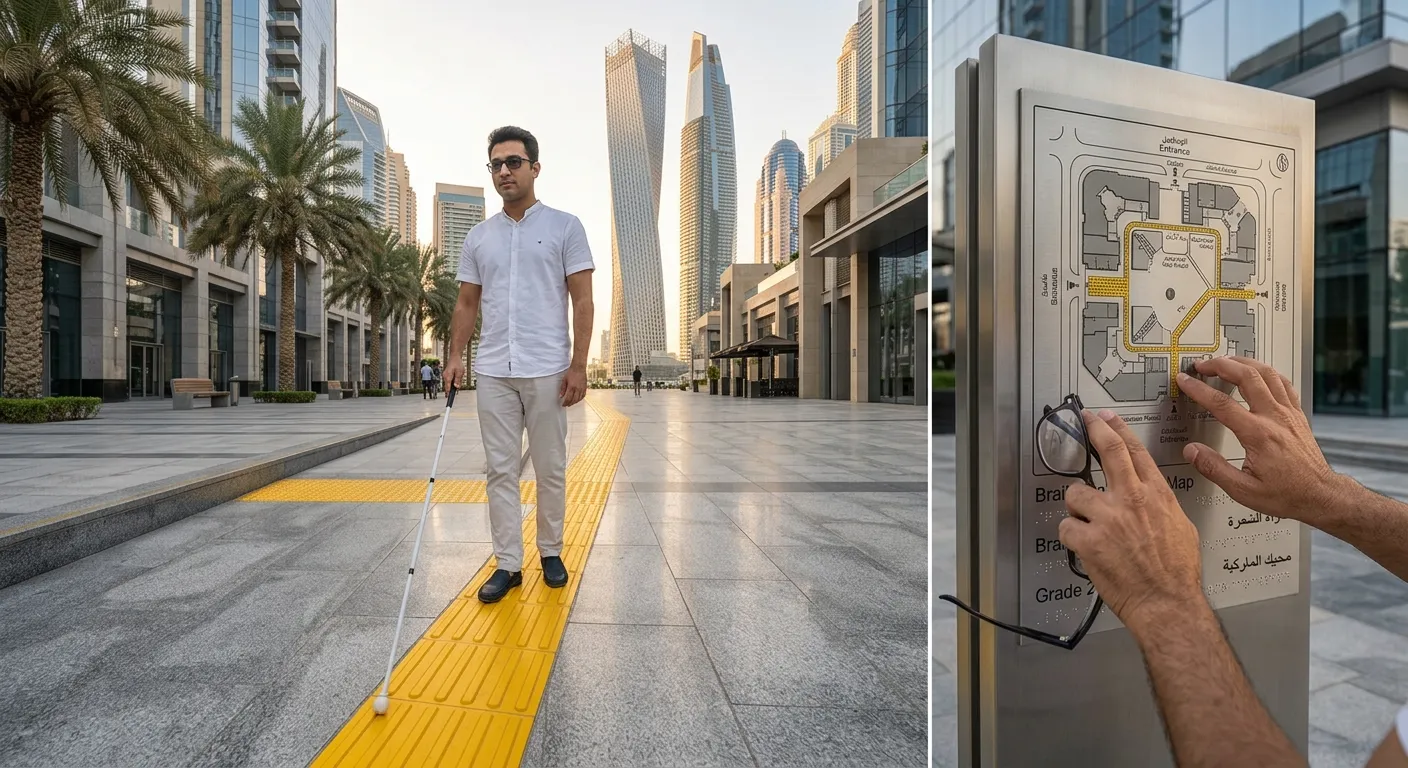
Tactile route and signage planned in at design stage for a commercial development, warning and directional paving specified alongside Braille and tactile map signage before construction.
Code & Compliance
Dubai Universal Design Code tactile surfaces, cited by section
Section 5.3, Tactile Surfaces
Minimum 50-point LRV colour contrast, maximum 4mm texture height, warning band width 300mm to 400mm, extending at least 300mm from the hazard.[REF: Dubai Universal Design Code, p.32-35]
Section D, Wayfinding
Tactile maps (14.4.1), tactile wayfinding (14.5.2), high embossment (14.11), Braille (14.12) and tactile signage position (14.13).[REF: Dubai Universal Design Code, p.234+]
Federal Law No. 29 of 2006 on the rights of People of Determination is the federal reference underpinning every Flex Access installation. Abu Dhabi projects are reviewed against the Abu Dhabi International Building Code, our team will confirm the exact clause reference for your specific site during the assessment.
After Installation
Caring for tactile surfaces after installation
A tactile system that passed inspection on handover day can still fail years later if it isn't maintained. Contrast fades, texture wears down, and a route that used to be compliant stops being detectable underfoot.
Cleaning that protects contrast
Harsh abrasives and the wrong cleaning method can dull the colour contrast a warning surface depends on. We advise facility teams on cleaning methods that don't degrade LRV contrast or surface texture.
Wear inspection
High-traffic warning pads at stairs and platform edges wear fastest. Periodic inspection catches texture loss before it becomes a compliance gap.
Why it matters long-term
A UAE building's accessibility compliance isn't a one-time sign-off, it holds only as long as the installed system still performs the way it did on day one.

No fixed price list, and that's deliberate
Tactile paving cost in the UAE depends on surface area, material choice and how many hazard points the route covers, so every quote is assessed first rather than pulled from a price list. You'll receive a written quote after the free site assessment, with no obligation to proceed. Assessments are typically scheduled within 2-3 business days.

"Paving, signage and Braille are usually sold as three separate line items. We treat them as one navigable route, because that's what the person using it actually experiences. Get the route wrong and it doesn't matter how good any single tile is."
Nouh Aqra, Founder, Managing Director & Accessibility Consultant, Flex Access
Frequently Asked Questions
Tactile paving, signage and Braille, answered directly
What is tactile paving?
Tactile paving is a textured, colour-contrasted ground surface that people who are blind or have low vision can detect by cane, foot or residual vision. In the UAE, it's laid to the Dubai Universal Design Code's warning and directional patterns, not a generic pattern.
What is tactile used for, and what is the purpose of tactile?
Tactile surfaces and signage exist to warn pedestrians of a hazard (a crossing, a stair, a platform edge) and to guide them along a route where there's no other physical edge to follow, such as a kerb or wall. The purpose is safe, independent navigation, not decoration.
What are tactile markers for visually impaired people?
Tactile markers are the physical patterns underfoot, warning domes and directional bars, plus the tactile and Braille signage mounted at doors, lifts and decision points, that together let a visually impaired person navigate a building or public route without relying on sight.
What is a tactile strip, and what is a tactile warning strip?
A tactile strip usually refers to a directional surface, a raised bar pattern laid parallel to the direction of travel that guides a cane user along a path. A tactile warning strip is the hazard version, a truncated dome or cone pattern laid crosswise at a stair, ramp or platform edge to signal "stop and check" rather than "keep walking."
What are the six types of tactile paving?
A commonly cited international classification (used in UK guidance, among others) lists six surface types by use: blister/warning, corduroy/hazard, platform edge on-street, platform edge off-street, segregated cycle track, and guidance/directional path. The Dubai Universal Design Code itself formally defines two categories, warning and directional, so a UAE installation is specified against those two rather than the fuller international list.
Where do tactiles need to be installed, and where are tactiles required?
Tactile surfaces are required at pedestrian crossings, stairs, ramps, platform edges, building entrances and any change of direction along a public route, per Dubai Universal Design Code Section 5.3 and Section D. This applies across metro stations, airports, government buildings, hospitals, hotels, malls, schools and residential retrofits.
How big are tactiles?
Under the Dubai Universal Design Code, warning surfaces run 300mm to 400mm wide and extend at least 300mm from the start of the hazard, with a maximum texture height of 4mm and a minimum 50-point LRV colour contrast against the surrounding floor.
Is tactile paving mandatory in Dubai, and what does a tactile paving consultation UAE actually involve?
Yes, for any public-facing building or route falling under Federal Law No. 29 of 2006 and the Dubai Universal Design Code. A consultation with Flex Access starts with a free site assessment against the code, not a product sales pitch.
What is the difference between tactile paving and Braille signage, and do all UAE buildings need Braille signage?
Tactile paving is the surface underfoot, Braille signage is the raised-dot text mounted on walls, doors and lift panels. Most public and commercial buildings in the UAE need both as part of the same wayfinding system under Dubai Universal Design Code Section D, the exact requirement depends on building type and use, which is why the free assessment matters.
What are the requirements for signage approval in Dubai Municipality?
There isn't a separate public permit track specifically for accessibility or tactile signage. Tactile and Braille signage is generally reviewed as part of a building's overall accessibility compliance sign-off against the Dubai Universal Design Code, alongside standard building-mounted signage approval (structural safety and NOC from the building owner). Flex Access handles the documentation for this as part of project handover.
How does route planning prevent installation mistakes?
Measuring the actual route, doorways, stairs, hazards, before ordering tiles catches the misalignment problems in section 4 before they're built into the floor, rather than finding them at inspection.
What maintenance does tactile paving need after installation?
Periodic cleaning with methods that don't dull colour contrast, and periodic inspection of high-traffic warning pads for texture wear, since both contrast and texture height are what make the surface detectable.
Written By
Nouh Aqra
Accessibility Consultant and Managing Director at Flex Access, with 10+ years working on accessibility and mobility solutions across the UAE, including tactile paving, wayfinding and Braille signage projects reviewed against the Dubai Universal Design Code and Federal Law No. 29 of 2006.
Related Services
Other accessibility solutions from Flex Access


Ready When You Are
Book a free assessment for tactile paving, signage and Braille installation anywhere in Dubai or the UAE.